
How to Thicken Hair Naturally for Fuller and Healthier Locks
It can be unsettling to realise your hair isn’t as thick as it once was. The good news is, you absolutely can take steps to thicken it naturally. The trick is to look at the whole picture—from the food you eat and how you care for your scalp to simple remedies you can whip up at home. Think of it as creating the perfect environment for your hair to thrive, from the inside out.
Understanding the Root Causes of Thinning Hair
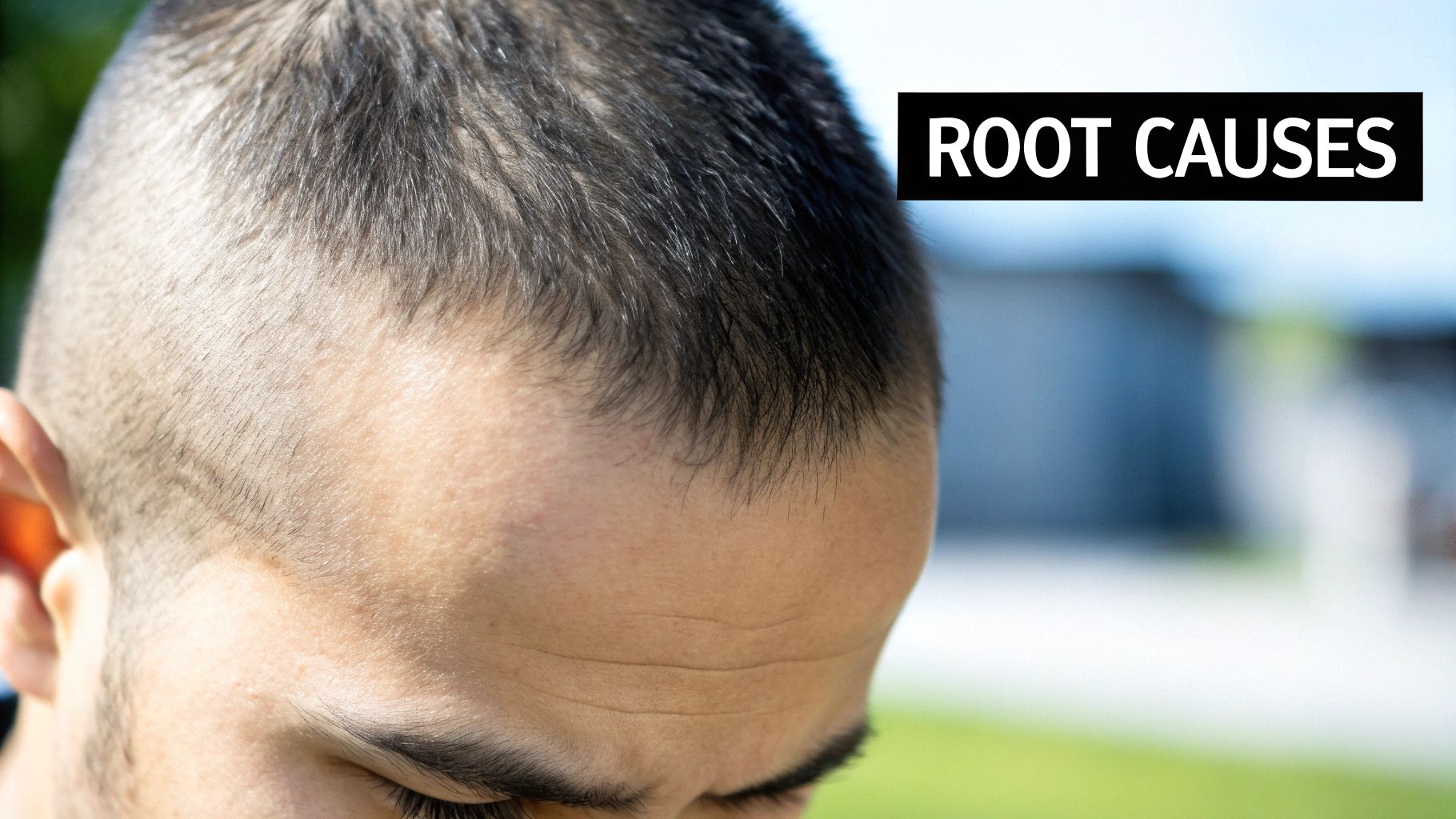
Before diving into solutions, it’s worth getting to the bottom of what’s actually going on. When your hair starts to thin, it’s not just about shedding more strands. It’s often a clear signal that your natural hair growth cycle has hit a snag. Anything from your genes to your daily routine can throw it off balance, cutting short the active growing phase and resulting in finer, weaker hairs that fall out more easily.
Once you grasp this, thinning hair stops being a frustrating mystery and becomes a problem you can actually solve. You can move beyond generic, one-size-fits-all advice and start targeting the specific triggers affecting your hair's density.
Key Factors That Influence Hair Thickness
So, what are these triggers? There are a few common culprits behind a loss of hair volume. Pinpointing which ones apply to you is the first real step toward building a plan that works.
- Genetics: Let's get the big one out of the way. Androgenetic alopecia (pattern baldness) is the main genetic reason for thinning in both men and women. It essentially pre-programs how your follicles react to certain hormones as you age.
- Hormonal Fluctuations: Big life events like pregnancy and menopause, or underlying issues like a thyroid imbalance, can wreak havoc on your hair. They disrupt the delicate hormonal symphony that keeps your hair growth cycle on track.
- Nutritional Deficiencies: Your hair follicles are hungry for specific nutrients. If your diet is low in things like iron, biotin, zinc, or protein, your hair production line can slow right down, leading to weaker growth.
- Stress Levels: When you're under the pump, your body produces more of the stress hormone cortisol. Consistently high levels can shock your follicles, pushing a large number of them into the "resting" phase at once. This often leads to a sudden, noticeable shed a few months down the track.
This is why getting familiar with the hair growth cycle is so helpful for figuring out exactly where things might be going off the rails.
The Australian Context
Living in Western Australia adds another layer to the challenge. That intense Aussie sun we know and love can be incredibly harsh on both your hair and scalp. It’s no surprise that in Australia, a staggering 40.8% of men deal with some form of baldness. This rate is often made worse by UV damage, which can prematurely age the scalp and put extra stress on the follicles.
This unique environmental pressure is a big reason why so many Aussies are looking into how to thicken hair naturally as their first line of defence.
By taking a holistic approach that tackles these internal and external factors head-on, you're building a stronger, more resilient foundation for healthier, thicker hair. This proactive mindset can often delay or even reduce the need for more permanent solutions like Scalp Micropigmentation (SMP) later on.
Fuelling Hair Growth From The Inside Out
While creams and serums have their place, the real secret to thicker hair often starts on your plate. What you eat is hands-down one of the most powerful tools you have. I always tell my clients to think of their hair follicles like tiny factories—if you don't give them the right raw materials, production is going to slow down, and the final product (your hair) just won't be up to scratch.
A balanced diet, packed with specific vitamins, minerals, and macronutrients, provides the literal building blocks for strong, resilient hair. Making a few intentional tweaks to your grocery list can kickstart some pretty amazing improvements from the inside out.
Start with the Foundations: Protein and Healthy Fats
It’s simple, really. Your hair is made almost entirely of a protein called keratin. If you're not getting enough protein in your diet, your body simply can't produce it efficiently. This is non-negotiable for anyone serious about gaining hair density, as it often leads to brittle, weak strands that break easily.
Just as important are healthy fats, especially omega-3 fatty acids. These are fantastic for nourishing the scalp, supporting the follicle itself, and adding a natural lustre and strength to your hair. They help fight the dryness that can lead to snapping and breakage.
Here’s where you can find them:
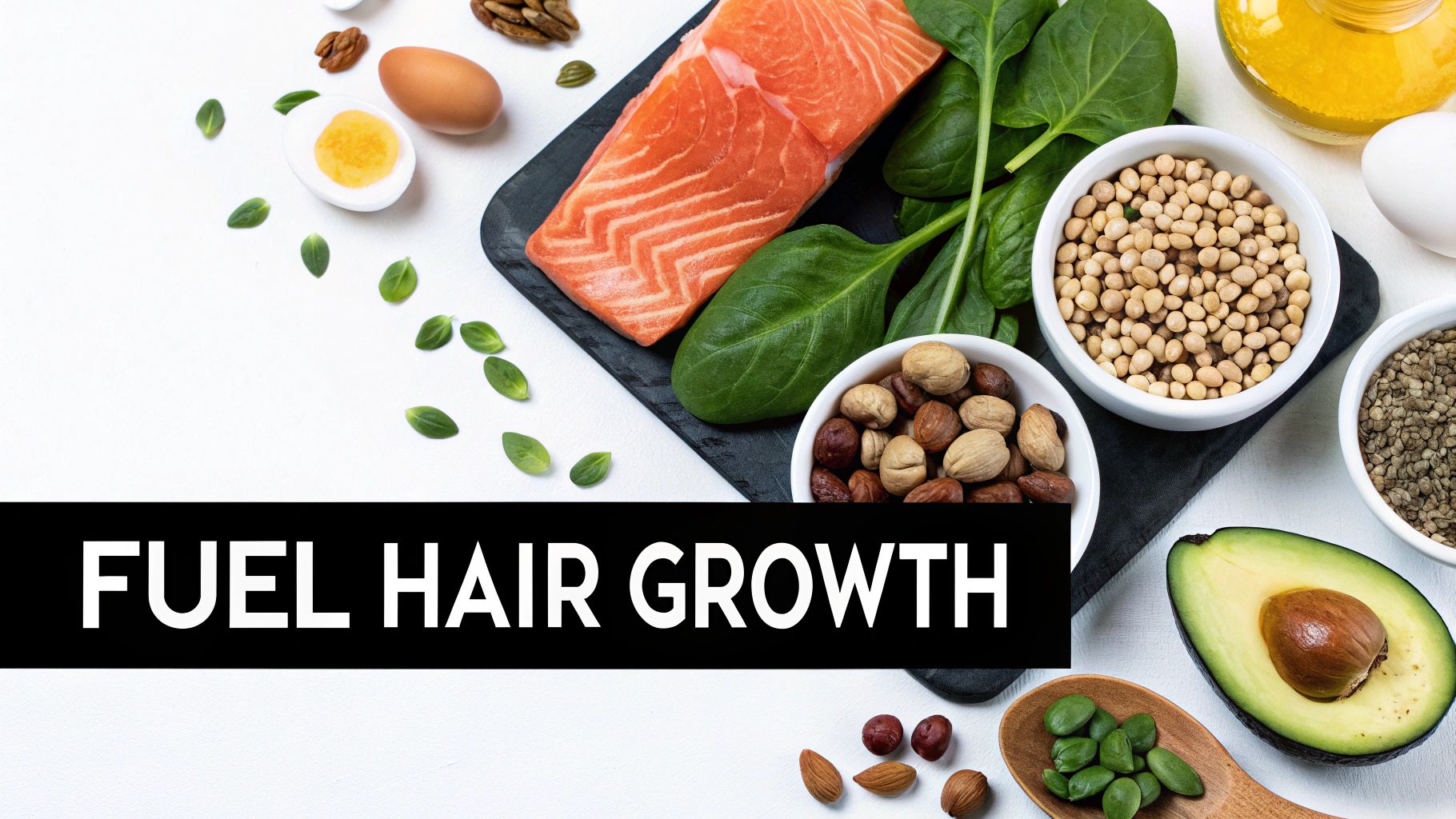
- Protein: Think lean meats like chicken and turkey, fatty fish (salmon and mackerel are brilliant), eggs, Greek yoghurt, lentils, and chickpeas.
- Healthy Fats: Avocado is a classic for a reason. Also, reach for nuts like walnuts and almonds, seeds like chia and flax, and good quality olive oil.
If you’re not sure whether you’re getting enough protein for your body’s needs, using a protein intake calculator can be a really helpful starting point. Hitting your daily target is a simple but incredibly effective first step.
The Micronutrients That Matter for Hair Thickness
Beyond protein and fats, a whole host of micronutrients play a vital role in the hair growth cycle. A deficiency in any of these can be a direct cause of thinning, so it pays to be mindful.
Iron is absolutely critical. It helps create haemoglobin, which is responsible for carrying oxygen to your cells for growth and repair—and that includes the cells that stimulate your hair follicles. It's no surprise that low iron levels (anaemia) are a very common culprit behind hair loss, particularly for women.
Zinc is another powerhouse. It's essential for hair tissue growth and repair, and it also helps keep the oil glands around the follicles working properly.
It's not just theory. One study showed that 70% of patients with thinning hair saw an 18% increase in hair density after just three months of ensuring they had enough key nutrients from whole foods. That really drives home how much of an impact nutrition can have.
Essential Nutrients for Thicker Hair and Where to Find Them
Knowing which nutrients to focus on is one thing, but figuring out how to get them into your daily meals is another. This quick-reference table breaks down the key players and the best Aussie food sources to find them in.
| Nutrient | Role in Hair Health | Top Food Sources |
|---|---|---|
| Biotin (B7) | Helps produce keratin, the primary protein in hair. | Eggs (especially the yolk), almonds, sweet potatoes, spinach. |
| Vitamin C | An antioxidant that protects follicles and helps create collagen. | Oranges, capsicum, strawberries, broccoli, kiwi fruit. |
| Vitamin E | A powerful antioxidant that can help prevent oxidative stress. | Sunflower seeds, almonds, avocado, spinach. |
| Iron | Carries oxygen to hair roots, helping them grow. | Red meat, spinach, lentils, oysters, tofu. |
| Zinc | Essential for hair tissue growth and repair. | Oysters, beef, pumpkin seeds, lentils. |
| Omega-3s | Reduce inflammation and nourish hair follicles. | Salmon, mackerel, walnuts, chia seeds. |
Stocking your pantry and fridge with these foods is a practical, delicious way to support your hair from the inside.
What About Supplements?
While a food-first approach is always the best strategy, supplements can be a great backup if you have a diagnosed deficiency or genuinely struggle to meet your needs through diet alone. But a word of caution: please don't self-prescribe.
It might sound counterintuitive, but taking too much of certain nutrients, like Vitamin A or selenium, can actually contribute to hair loss. Before you start taking anything, it's so important to chat with your GP or a registered dietitian. They can run blood tests to pinpoint any specific deficiencies and recommend the right supplement and dosage for you.
For a deeper look into this, check out our guide on the best vitamins for thinning hair to get a clearer idea of what might be most beneficial for your situation.
Natural Topical Remedies You Can Make at Home
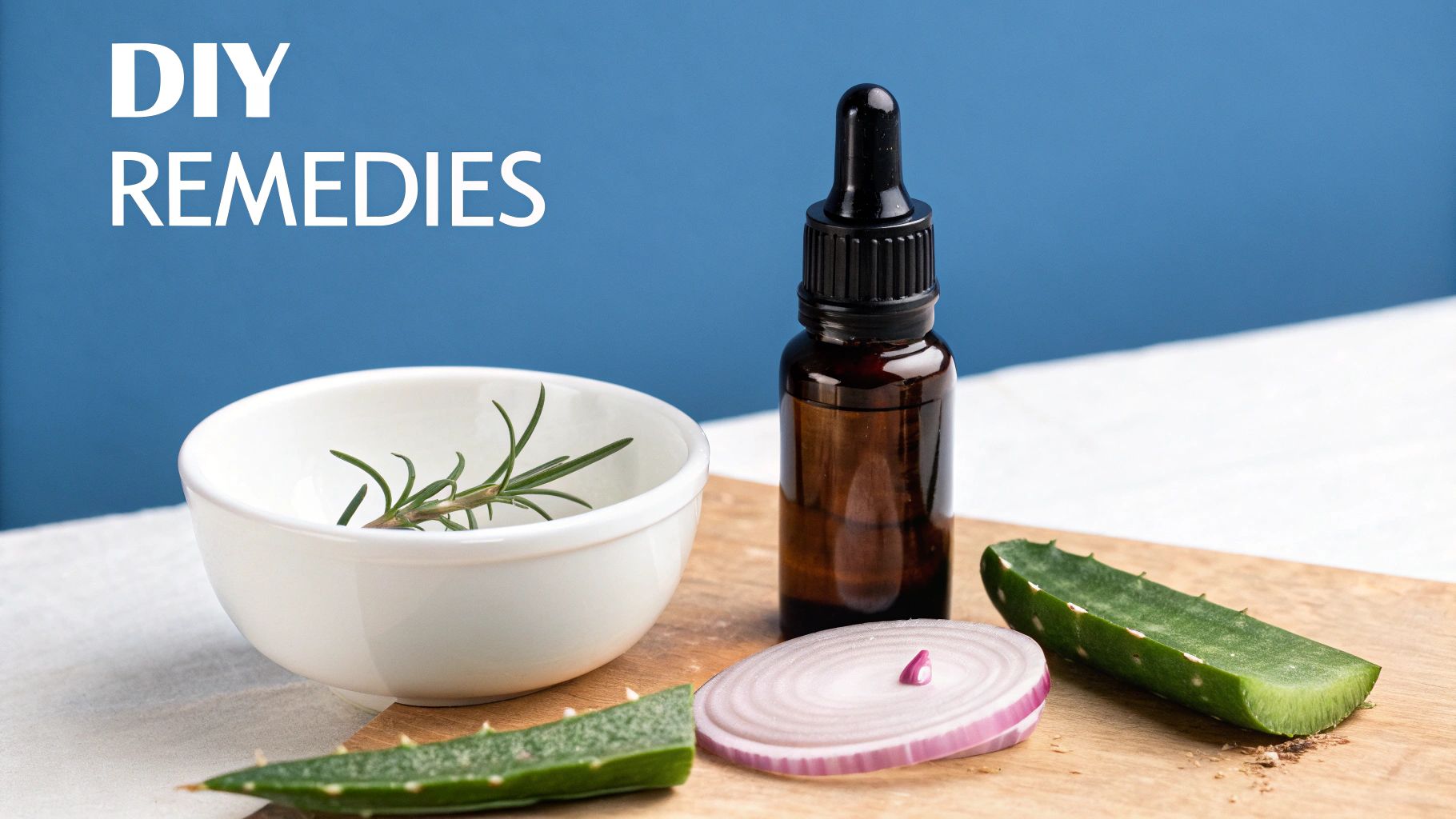
While nourishing your body from the inside is a huge piece of the puzzle, you can also give your scalp and hair a direct boost from the outside. Creating your own topical treatments is a fantastic, affordable way to get hands-on with your hair-thickening journey. You don’t need complicated formulas, either—some of the most potent ingredients for waking up hair follicles are probably in your kitchen right now.
These DIY remedies work by improving scalp circulation, delivering key nutrients straight to the root, and calming inflammation. All of this helps create the ideal environment for thicker, healthier hair to grow, making them a perfect partner to a nutrient-rich diet.
The Power of Rosemary Oil
If you try only one of these remedies, make it this one. Rosemary oil isn't just a lovely-smelling herb; it's a scientifically-backed powerhouse for hair growth. In fact, research has shown it can be as effective as minoxidil (the active ingredient in many commercial hair loss products) for encouraging new growth over a six-month period.
So, how does it work? It boosts circulation in the scalp, making sure your follicles get a rich supply of blood and nutrients. It also has potent anti-inflammatory properties that help keep your scalp healthy, balanced, and ready to grow hair.
A Simple Rosemary Oil Scalp Treatment
- Get your ingredients ready. All you need are 2-3 drops of pure rosemary essential oil and one tablespoon of a carrier oil like jojoba, coconut, or almond oil.
- Mix them up. Combine the oils in a small bowl. It's really important to dilute essential oils before they touch your skin, as they can be quite irritating on their own.
- Apply and massage. Part your hair and use your fingertips to massage the oil mixture directly into your scalp for about 5-10 minutes. Don't skip the massage—it's crucial for getting that blood flow going.
- Let it do its thing. Leave the treatment on for at least 30 minutes. If you want a really deep conditioning treatment, you can even leave it in overnight (just pop a towel over your pillow).
- Wash it out. Shampoo and condition your hair as you normally would. For the best results, try to do this two to three times per week.
The Surprising Strength of Onion Juice
I know, it sounds a bit strange. But don't knock it until you've tried it. Onion juice is incredibly effective because of its high sulphur content. Sulphur is a building block of keratin, the protein that makes up your hair, so applying it topically helps fortify and thicken the strands themselves.
One study was particularly telling: after six weeks, a whopping 87% of participants who used onion juice saw significant hair regrowth. It’s a simple, potent remedy for kickstarting dormant follicles.
Why it Works: Think of sulphur as the "glue" that holds your hair's protein structure together. A direct application helps reinforce this structure, leading to stronger strands that are less prone to breakage and appear thicker over time.
A Sulphur-Rich Onion Juice Rinse
- Juice the onion. Peel and roughly chop one medium-sized red onion. Blend it into a pulp, then strain the mixture through a cheesecloth or fine sieve to get the juice out.
- Apply to your scalp. Using a cotton pad, dab the onion juice all over your scalp. Really focus on the areas where your hair feels thinnest.
- Wait it out. Let the juice sit for 15-30 minutes. The smell is pretty strong, I won't lie, but it will wash out completely.
- Rinse and shampoo. Wash your hair thoroughly with a gentle shampoo. You can repeat this treatment once or twice a week.
Soothe and Balance with Aloe Vera
An irritated or inflamed scalp is not a happy place for hair follicles. Aloe vera is nature's ultimate soothing agent. It helps calm inflammation, reduce dandruff, and balance the scalp's pH level, creating the perfect foundation for healthy growth.
The enzymes in aloe also gently exfoliate, clearing away dead skin cells that can clog follicles and get in the way of new hair. It’s less about direct stimulation and more about creating the ideal conditions for your other efforts to work their magic.
A Calming Aloe Vera Scalp Mask
- Get your gel. The best option is fresh gel scooped directly from an aloe vera leaf. If you can't get that, a 100% pure, store-bought aloe vera gel is the next best thing.
- Apply generously. Work the gel directly into your scalp and through your hair until everything is fully saturated.
- Relax and let it work. Leave the mask on for about 30-45 minutes before rinsing with lukewarm water.
This mask is gentle enough to use several times a week and is a brilliant way to prep your scalp before a more stimulating treatment like the rosemary oil. While these home remedies are a great starting point, exploring the best products for thinning hair can offer additional support with professionally formulated solutions.
Smart Scalp Care and Styling Habits for Fuller Hair
What you put in your body is crucial, but what you do to your hair day-to-day matters just as much. The small, almost unconscious choices you make can have a massive impact on your hair's thickness. How you wash, brush, and style your hair can either protect the strands you have or lead to totally avoidable breakage and thinning.
Think of it this way: a healthy scalp is the foundation for healthy hair. It’s the soil from which everything grows. If that soil is clogged, irritated, or lacks good circulation, your hair follicles simply can't do their job properly. It's a surprisingly common oversight, but getting your scalp care right is a non-negotiable step.
Rethink Your Washing Routine
It's time to start treating your scalp with the same care you give your face. This means being a bit more discerning about the products you use and adopting a much gentler approach.
So many shampoos on the supermarket shelf are loaded with harsh detergents like sodium lauryl sulfate (SLS). They produce a rich, satisfying lather, but they also strip your scalp of the natural oils it needs to stay balanced and protected. This often leads to a cycle of dryness and irritation—exactly the kind of environment that hinders healthy hair growth.
The fix is simple: make the switch to a sulphate-free shampoo. These formulas are far gentler, cleansing your hair and scalp effectively without disrupting that delicate natural balance. When you're washing, really focus on massaging the shampoo into your scalp with your fingertips (never your nails!) to get a good clean without scratching or irritating the skin.
One of the easiest and most effective things you can do for your hair is a daily scalp massage. Seriously, just a few minutes of gentle, circular motions with your fingertips can dramatically boost blood flow to the follicles. This ensures they're getting a steady stream of the oxygen and nutrients they need to thrive.
The Gentle Art of Brushing and Drying
I see this all the time—people are incredibly rough with their hair without even realising it. This kind of aggressive handling is a leading cause of preventable breakage, which of course makes hair look thinner. Hair is at its absolute most fragile when it's wet, as its internal protein bonds are temporarily weakened.
Follow these simple rules to keep damage to a minimum:
- Never, ever brush your hair when it's wet. Instead, grab a wide-tooth comb and gently work through any tangles, always starting from the ends and moving slowly up towards the roots.
- Ditch the rough towel-drying. Vigorously rubbing your hair with a coarse bath towel is a recipe for frizz and breakage. It just roughs up the hair's protective outer layer. A much better method is to gently squeeze the excess water out with a soft microfibre towel or even an old cotton t-shirt.
- Ease up on the heat styling. High heat from blow dryers, straighteners, and curling wands literally cooks the protein structure of your hair, leaving it weak and prone to snapping. Let your hair air-dry as often as you can. If you absolutely have to use heat, always shield your strands with a heat protectant spray first and stick to the lowest temperature setting that gets the job done.
These aren't huge, life-altering changes, but they add up. Making these small adjustments can dramatically reduce the amount of hair you lose to daily wear and tear.
Style Smart to Maximise Volume
Some hairstyles put a lot of physical stress on your hair follicles, while others can be used to cleverly create the illusion of more volume. The trick is to find styles that boost fullness without causing damage down the line.
The number one thing to avoid? Any style that pulls tightly on the scalp. Think slicked-back ponytails, tight buns, or severe braids. Over time, that constant tension can cause a specific type of hair loss called traction alopecia, where the follicles become so strained they can be permanently damaged. Always opt for looser, more relaxed styles that don't pull at your roots.
For anyone looking for an immediate visual boost, the right styling is a game-changer. Learning a few simple techniques is one of the best ways you can hide your scalp with thin hair while you wait for your other natural methods to work their magic. A little volumising mousse applied at the roots or a quick spritz of texturising spray can add instant lift and body, making your hair look and feel so much fuller. These smart habits don’t just protect your hair—they give you a real confidence boost on your journey to thicker, healthier locks.
Setting Realistic Expectations for Your Hair Journey
When you decide to thicken your hair naturally, the two most important things you'll need are consistency and a healthy dose of patience. It’s completely understandable to want results yesterday, but the reality is that hair growth happens in its own time.
Think of it as a marathon, not a sprint. Every good habit you introduce—from better nutrition to gentle scalp care—builds on the last. You’re creating the perfect environment for your hair follicles to do their best work, and that takes time.
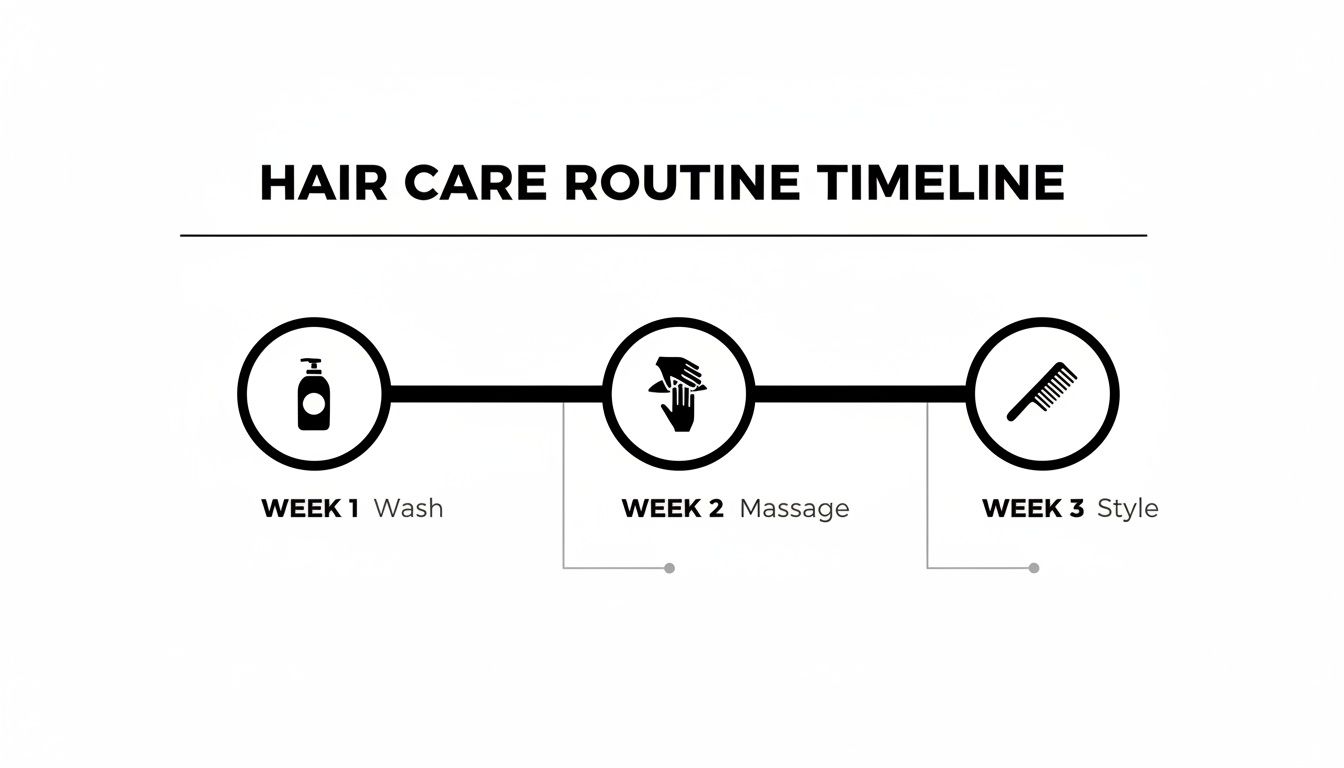
Your Potential Timeline for Natural Hair Thickening
While everyone's journey is unique, you can generally expect to see progress in stages. The first year is all about laying a solid foundation and patiently waiting for that new, stronger hair to make its debut.
Here’s a realistic breakdown of what you might see:
- Months 1-2: The first changes you’ll probably notice are in the quality of your existing hair. You might see less shedding in the shower or on your brush, and your hair could feel softer and look healthier. This is a great sign that your scalp is already responding to the extra TLC.
- Months 3-6: This is the exciting part! Keep a close eye out for tiny, new baby hairs popping up, especially along your hairline and part. It won't be a dramatic change in volume just yet, but it’s the proof you’re looking for that your efforts are paying off.
- Months 6-12: Now you’ll start to see and feel a real difference in thickness. Those baby hairs have had time to grow out, contributing to the overall density of your hair. You should feel more fullness, and any sparser patches will likely look more filled in.
Each step in your routine works together, creating a cumulative effect over time. Simple, consistent habits really are the key.
Red Flags That Signal It's Time for a Professional
Natural methods can do wonders, but they can’t fix everything. It's crucial to know when to stop and seek professional advice for something that might be more serious.
Don’t ignore significant changes. If you’ve been sticking to a healthy routine for over six months with absolutely no improvement, or if your hair loss is sudden and severe, it's time to book in with your GP or a dermatologist.
Keep an eye out for these specific red flags:
- Sudden, Rapid Hair Loss: A dramatic increase in shedding that comes on quickly.
- Distinct Bald Patches: The sudden appearance of smooth, circular bald spots.
- Scalp Inflammation: Any persistent redness, itching, scaling, or pain on your scalp.
These can be signs of an underlying health issue that needs a proper medical diagnosis.
When to Consider the Next Step
For those with more advanced thinning, or for anyone who wants a guaranteed visual boost, natural approaches can be paired with professional solutions. This is where Scalp Micropigmentation (SMP) comes in.
SMP is a highly specialised cosmetic tattoo that masterfully mimics the look of individual hair follicles on the scalp. While it doesn't actually grow hair, it's brilliant at creating the illusion of density. It’s an incredible option for camouflaging thinning areas and restoring the look of a fuller head of hair, giving you a confidence boost that can be hard to achieve with natural methods alone.
Common Questions About Thickening Hair Naturally
Starting a natural hair-thickening plan always brings up a few questions. It’s completely normal to wonder if what you're doing is actually going to work. Let's tackle some of the most common queries I hear, so you can feel confident and stick with it.
Having clear answers helps set realistic expectations and, more importantly, keeps you motivated when you're second-guessing things.
How Long Does It Genuinely Take to See Results?
This is the big one, and the honest answer is: patience is key. You'll likely notice some early positive signs, like less hair in the shower drain or a healthier texture, within the first one to two months.
But for that visible, noticeable difference in thickness and density? You’re looking at about three to six months. It's not an overnight fix because your hair follicles need time to wake up from their resting phase and kick into a new growth cycle. To really see what your efforts can do, give it a solid six months of consistency before you make a call.
Are DIY Hair Masks Like Egg or Avocado Actually Effective?
Yes, they definitely have their place, but it's crucial to know what they're doing. Think of them less as growth boosters and more as intensive conditioners for the hair you already have. They work their magic on the existing hair shaft.
- Egg Masks: Brilliant for a protein hit. They temporarily patch up and strengthen the hair shaft, making each strand feel more robust and look a little thicker.
- Avocado Masks: These are all about moisture. Packed with fatty acids and vitamins, avocado makes your hair more elastic and less prone to snapping, which is vital for keeping the length and fullness you've got.
So, while they won't sprout new follicles, they're fantastic for protecting your strands from damage. That protection is a huge part of achieving a fuller look.
Stress is a massive, often underestimated, player in hair health. Ongoing stress can literally shock a huge number of hair follicles into the shedding phase all at once. If you feel like you're doing everything right but getting nowhere, it's really worth exploring the powerful link between stress and hair loss. It might just be the missing piece of your puzzle. You can learn more by reading about how stress can cause hair loss on our blog.
Can I Combine Natural Methods With Medical Treatments?
Absolutely. In fact, it's often a great strategy, but you've got to chat with your doctor first. Creating a healthy foundation with a nutrient-dense diet and good scalp care can actually support and enhance the results you get from medical treatments like minoxidil.
The only thing to be careful about is mixing things on your scalp. You wouldn't want to apply potent essential oils at the same time as a medicated product, as it could lead to irritation. A health professional can help you map out a combined approach that’s both safe and effective for you.
When Is It Time to See a Professional?
Don't wait if you experience sudden and rapid hair loss, notice distinct bald patches appearing, or if your scalp becomes itchy, inflamed, or painful. These can be red flags for an underlying health condition that needs a proper diagnosis.
On the other hand, if you’ve been sticking to a solid natural routine for over six months and you’re just not seeing any improvement, that’s also a good time to get a professional opinion. A specialist can dig deeper to find the root cause and talk you through more advanced, guaranteed solutions.
At My Transformation, we specialise in Scalp Micropigmentation (SMP), a life-changing solution that creates the immediate appearance of thicker, fuller hair. If you're ready to explore a guaranteed way to restore your confidence, visit us at https://www.mytransformation.com.au.