
how can i hide my scalp with thin hair? Tips for fuller look
When you're dealing with thinning hair, the goal isn't just to hide your scalp—it's to regain your confidence. The good news is there are several simple and effective ways to do this right now. You can use clever hairstyling to create volume, apply cosmetic concealers for instant coverage, and choose the right volumizing products to lift hair at the root.
These are by far the fastest and most effective ways to create the illusion of thicker hair.
Quick And Effective Scalp Concealing Methods
Seeing more scalp than you’d like can be frustrating, but you don't have to wait for long-term treatments to see a change. We're talking about actionable, everyday fixes you can start using immediately to feel better about your hair. The trick is to reduce the contrast between your hair colour and your scalp, which instantly makes thinning areas less noticeable.
Most people find success by combining a few different approaches. Let's break them down.
Strategic Hairstyling
This is all about using the hair you have to your best advantage. The right cut and styling techniques can physically cover sparse areas and create a powerful illusion of fullness. Think shorter, textured cuts that add body, or even a side part to strategically cover a thinning crown.
Cosmetic Concealers
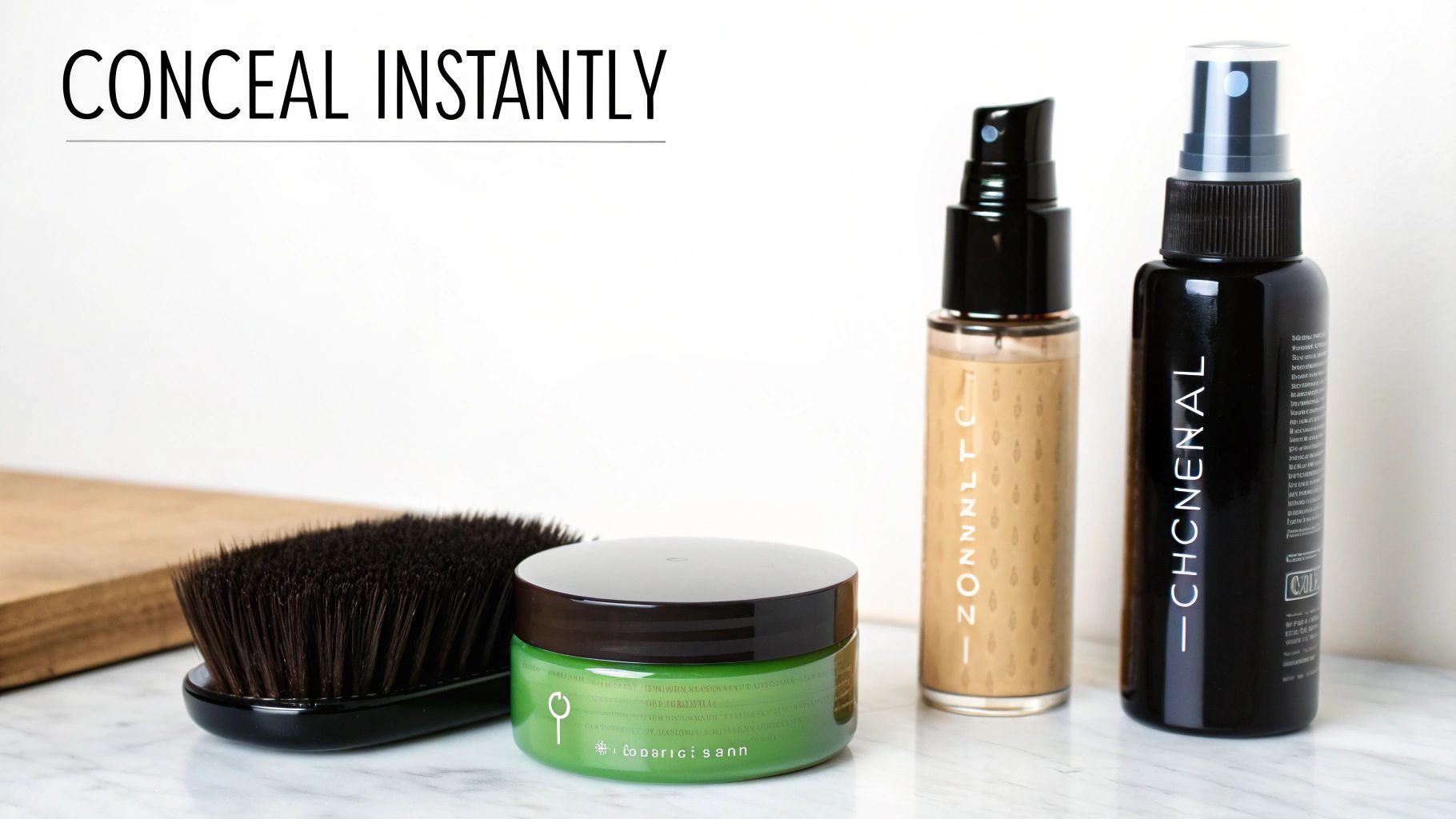
These are your best friends for a quick fix. Products like hair fibres or tinted powders cling to your existing hair and scalp, temporarily camouflaging exposed skin. They're brilliant for special occasions or just for that daily boost of confidence.
Volumizing Products
Never underestimate the power of a good mousse or root-lifting spray. The right products can lift the hair shaft away from the scalp, which instantly makes your hair look and feel thicker. It’s a simple change to your daily routine that can make a world of difference.
This chart can help you figure out if a quick fix is right for you or if you should explore something more permanent.
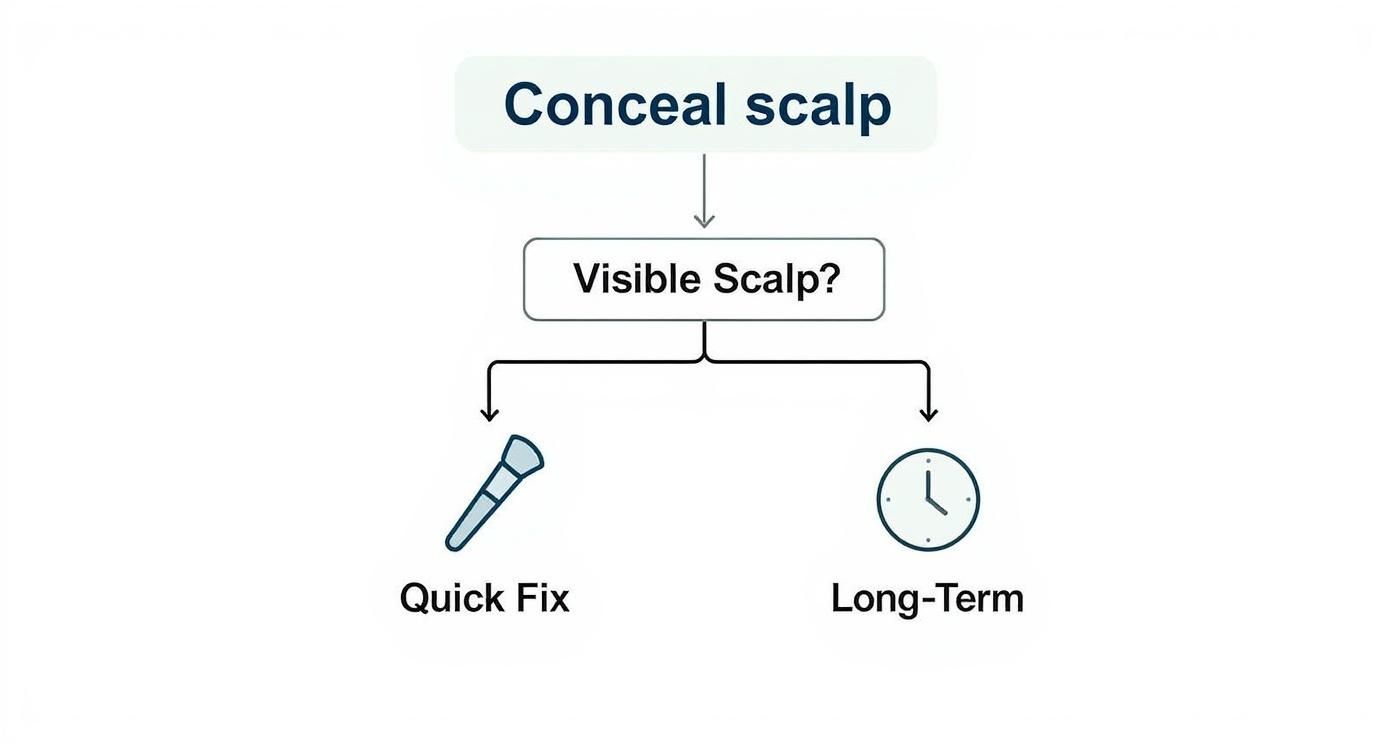
The infographic lays out the choice between daily cosmetic applications and more lasting options like scalp micropigmentation. While the methods here offer fantastic temporary results, some people eventually look for a lower-maintenance solution. If that sounds like you, it's worth exploring the differences between scalp micropigmentation vs hair toppers for a more set-and-forget approach.
Ultimately, the best path depends entirely on your lifestyle, budget, and what makes you feel most comfortable.
Strategic Hairstyling for Thicker-Looking Hair
Before you even think about reaching for a product, let's talk about the foundation of it all: your haircut. The right cut is your single most powerful tool for creating the illusion of thicker, fuller hair. It's all about building movement and texture to cleverly draw the eye away from any scalp show-through.
Some of the worst offenders for thinning hair are slicked-back styles or long, one-length cuts. These tend to lie flat, separate easily, and actually accentuate sparse areas. What you really want is a cut that builds volume and shape right from the get-go.
The Power of Layers and Texture
From years of experience, I can tell you that the most effective cuts for thin hair are usually shorter and layered. Think along the lines of a textured crop, a classic layered bob, or even a pixie cut. These styles get rid of dead weight at the ends, which lets the roots lift and gives your hair natural body.
Next time you’re in the salon chair, ask your stylist for:
- Textured Ends: This just means cutting into the tips of the hair to create a softer, piecey look. It’s a game-changer because it stops the hair from clumping together and helps it cover more of the scalp.
- Subtle Layers: We’re not talking about harsh, choppy layers from the 90s. Soft, strategic layering adds beautiful movement and is the best defence against flat, lifeless hair.
For the blokes out there, a sharp buzz cut or a textured crop works wonders. These styles are brilliant at reducing the contrast between your hair and your scalp. For more ideas, we've put together a full guide on the best hairstyles for balding men with plenty of practical examples.
Everyday Styling Tricks for Instant Volume
The haircut is your base, but how you style it day-to-day makes a huge difference. One of the simplest yet most effective tricks in the book is to switch up your part. If you’ve parted your hair on the left your whole life, try flipping it over to the right. Even a messy zig-zag part can work. Your roots have been trained to lie flat, so this small change forces them to stand up, giving you an instant lift.
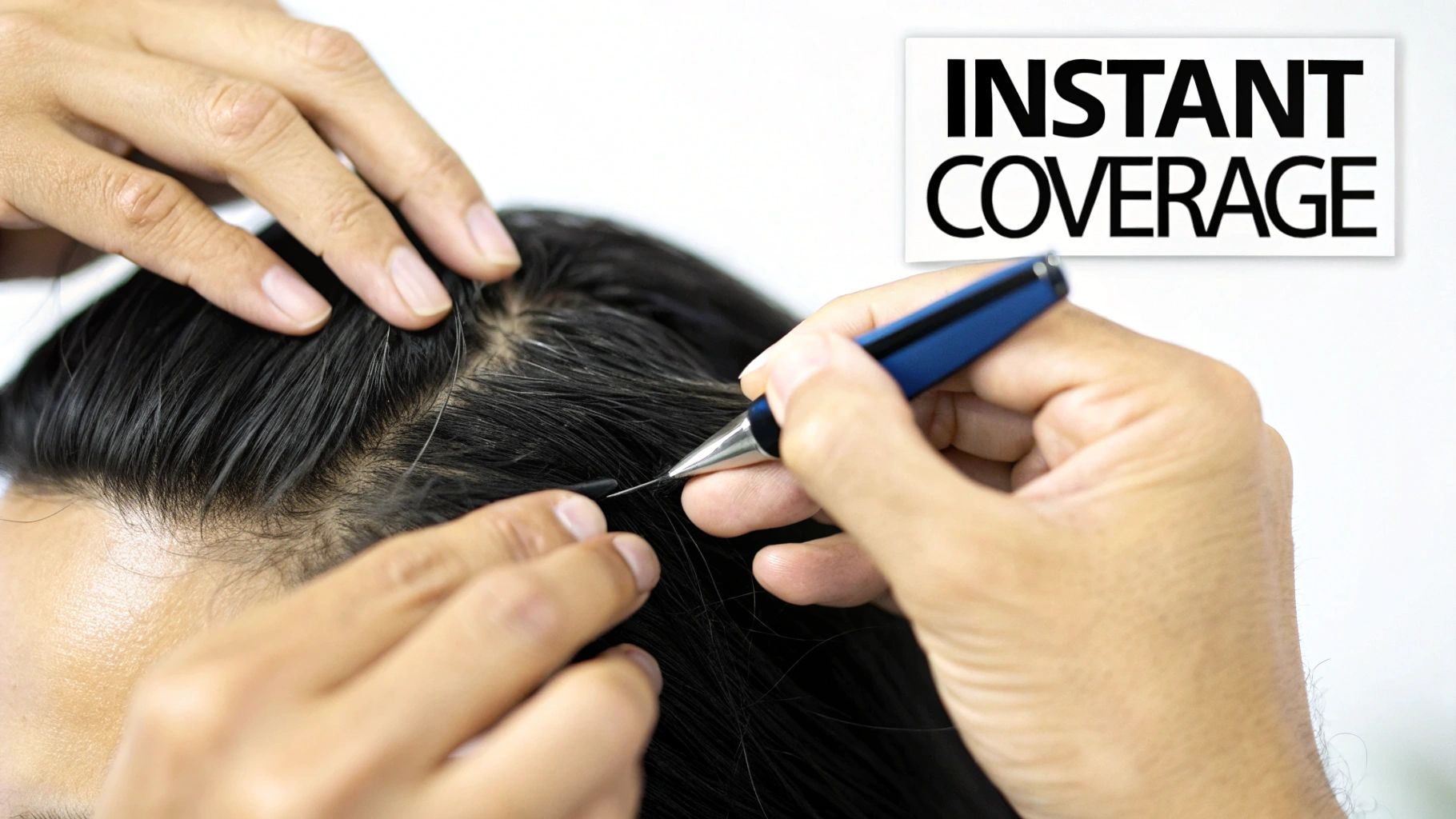
Pro Tip: When you blow-dry, flip your head upside down and aim the heat directly at the roots. It’s a classic technique for a reason—it lifts the hair straight off the scalp for maximum volume. Once you’re done, a quick blast of cool air will help lock that volume in place all day.
Choosing The Right Products For Instant Coverage
When you walk down the hair care aisle, the sheer number of options can feel a bit much. But if you’re looking for a quick, noticeable fix for a visible scalp, zero in on products that offer instant cosmetic coverage. These work in one of two ways: they either bulk up the hair you have, or they colour your scalp to reduce the contrast between skin and hair. Either way, they’re a brilliant tool if you’re wondering how to hide your scalp with thin hair.
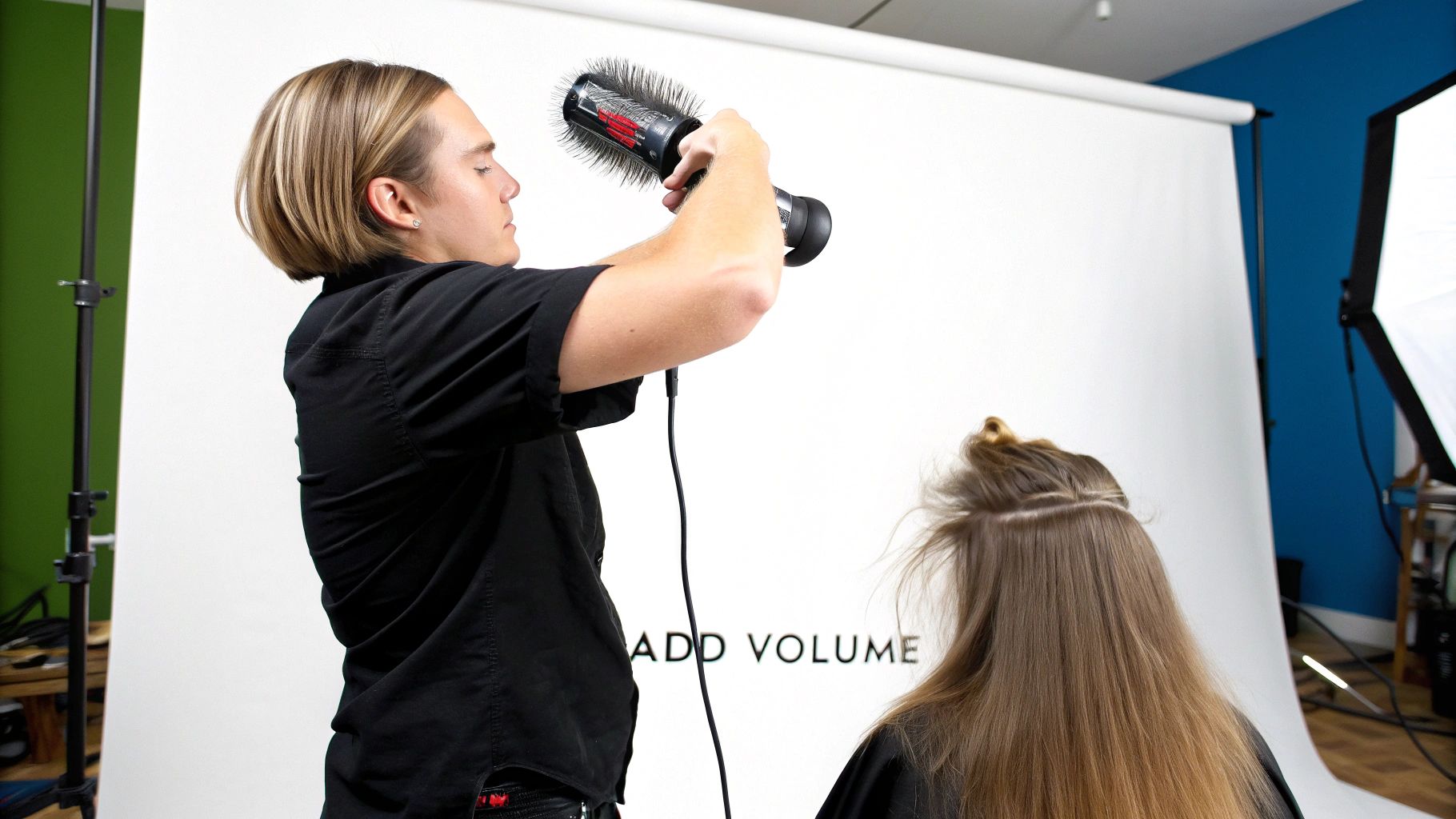
The go-to for many people is keratin hair fibres. Think of them as tiny, statically-charged particles that you just shake onto any thinning spots. They have this amazing ability to cling to your existing hair strands, making each one look much thicker on the spot. When you get the colour match right, the result is incredibly natural.
Beyond Hair Fibres
Fibres are a game-changer, but they’re not your only option. A few other products can deliver that same confidence boost, just with a different application style.
- Tinted Dry Shampoos: These are absolute workhorses. Not only do they soak up oil and refresh your roots, but they also lay down a bit of colour right on your scalp to instantly camouflage sparse patches.
- Root Touch-Up Sprays: You might know them for covering regrowth, but they’re fantastic for scalp coverage too. A quick, light spray along your parting or crown can make a world of difference.
It's no surprise these products are popular. An industry report revealed that 85% of Australian men and 33% of women experience some degree of hair loss, so there's a huge demand for these kinds of instant solutions.
Want a pro-level finish? Try layering your products. Start with a volumising mousse or a texturising spray to give your hair some lift and grip. This creates the perfect base for fibres or powders to grab onto, making the final look even more seamless.
Application Tips For A Natural Finish
The real secret to making these concealers look completely undetectable is all in the technique. Always start with a light hand—you can build up coverage, but it's much harder to take it away.
When using powders or fibres, gently pat them into your hair instead of rubbing them in, which can cause clumping. For sprays, hold the can about 15 centimetres from your head and apply in short, sharp bursts. Getting the application right is key, and you might find some useful tips in guides about finding the best natural concealers to help you perfect your technique.
While these products are fantastic for a daily confidence boost or a special event, remember they are a temporary fix. If you're after a more permanent solution for adding density, it’s worth looking into the best hair thickening treatments that focus on improving your hair's health from the inside out.
Exploring Longer-Term Concealment Solutions
While daily sprays and fibres are brilliant for a quick fix, some of us want a solution that doesn't wash out with the next shampoo. If you're looking for a more lasting answer to how to hide a scalp with thin hair, there are some impressive techniques that offer durable, low-maintenance results.
These options go way beyond daily applications, providing camouflage that can last for years.
One of the most popular and effective methods out there is Scalp Micropigmentation (SMP). Don't confuse this with a standard tattoo. SMP is a highly specialised cosmetic procedure where a technician applies tiny dots of pigment to the scalp. The whole point is to mimic the look of individual hair follicles, which cleverly dials down the contrast between your hair and skin.
For people with thinning but longer hair, this creates a fantastic illusion of density. For those with more significant hair loss, it gives a clean, sharp, buzzed-cut look that's incredibly realistic.
Understanding Scalp Micropigmentation
SMP has become a go-to choice here in Australia, with clinics seeing a huge uptake, especially from men aged 30 to 50 who want an alternative to invasive transplants. It's a non-surgical way to camouflage thinning on the crown, redefine a hairline, or add visual density across the whole scalp. To get the full picture, you can check out our detailed guide on what scalp micropigmentation is and how it all works.
The real game-changer with SMP is how long it lasts. Once your sessions are done, the results can look great for years. All you'll need is a quick touch-up every few years to keep the pigment looking fresh and sharp.
Adding Volume with Toppers and Extensions
Another fantastic long-term approach is to physically add more hair where it’s needed most. This is where hair toppers and high-quality extensions really shine.
A hair topper isn't a full wig. Think of it as a small, targeted hairpiece that clips securely onto the crown of your head. It’s designed to blend in perfectly with your existing hair to cover up those thinning spots right at the top.
They come in all sorts of sizes, colours, and hair types, so finding a natural-looking match is easier than ever. Modern toppers are also surprisingly lightweight and secure, and you can style them just like your own hair. It's an incredible confidence boost without the commitment or cost of a surgical procedure.
Ultimately, both SMP and hair additions are reliable, long-term ways to conceal a visible scalp, each suiting different lifestyles and goals.
Daily Hair Care Habits That Make A Difference
While scalp concealers are brilliant for an instant fix, think of them as the finishing touch. The real groundwork for making thin hair appear fuller starts with how you treat it every single day.
Making a few small tweaks to your routine can have a massive impact on reducing breakage and fostering a healthier scalp. When your hair and scalp are in top condition, every styling trick you use just works better. It's all about creating the best possible foundation.
The golden rule? Be gentle. Hair that’s already fine or thinning is naturally more fragile. Rough towel-drying, aggressive brushing, and even harsh washing techniques can easily snap these delicate strands.
A great first move is switching to a sulphate-free shampoo. These formulas clean your hair and scalp effectively without stripping away the protective natural oils that are crucial for keeping everything healthy.
Heat is another major culprit. Constant exposure to high temperatures from straighteners and curling wands will weaken the hair shaft over time, making it much more likely to break. If you must use them, always, always apply a heat protectant spray first and try to give your hair a few days off from heat styling each week.
Feeding Your Follicles
It’s an old saying, but you really are what you eat—and that goes for your hair, too. What you put into your body has a direct line to your hair's strength, texture, and growth cycle. A balanced diet packed with the right nutrients is non-negotiable for healthy hair.
If your body is missing key vitamins and minerals, it can often show up as thinning hair. Think of good nutrition as the internal support system for achieving fuller-looking locks.
Here are a few power-packed nutrients to prioritise:
- Biotin and Zinc: These are the building blocks for keratin, the protein your hair is made of.
- Iron: Low iron is a well-known cause of hair shedding, especially for women.
You're not alone in this. The link between lifestyle and hair health is something Aussies are increasingly tuned into. The local hair loss treatment industry is now valued at a staggering USD 133.84 million, a clear sign of how many people are looking for answers. Here in Australia, factors like high UV exposure can also play a role by stressing the scalp, making these daily habits even more important for long-term hair health. You can read more about the Australian hair loss treatment market.
Answering Your Top Questions About Thinning Hair
When you start looking into ways to conceal a thinning scalp, a lot of questions pop up. It's completely normal. Getting straight answers is the first step to feeling good about your choice, so let's tackle some of the most common things people ask.
A big one we hear all the time is: will these products make my hair loss worse? The short answer is no. High-quality keratin hair fibres are purely cosmetic. They simply cling to the hair you already have, so they don’t clog your follicles or mess with your hair's natural growth cycle.
Then there's the question of making it look natural. The trick here is twofold: get the colour match spot-on with your roots, and remember that less is more. Always start with a tiny amount and build it up. A gentle patting motion works best for fibres, while a light touch with your fingertip can soften the edges of a spray concealer for a seamless blend.
Can I Use Concealers With Hair Growth Treatments?
Absolutely. If you're using something like a topical Minoxidil treatment, the routine is simple. Just apply the treatment directly to your scalp first and let it dry completely.
Once it's fully absorbed, go ahead and apply your fibres or powder concealer. This way, your treatment can do its job without interference, and the concealer goes on smoothly.
Key Takeaway: How waterproof are concealers? Well, it varies. Most hair fibres will hold up against a bit of sweat or a light drizzle, but they're not going to survive a torrential downpour or a swim. A good setting spray can definitely improve their staying power. For a genuinely permanent and waterproof fix, scalp micropigmentation is in a league of its own.
Sometimes, using concealers is a step on a bigger journey. If you're finding yourself thinking about more permanent solutions, our guide on whether you should shave your head if you have hair loss is a great read to help you explore all your options.
At My Transformation, we're here to help you find the hair loss solution that restores your confidence. Take a look at our scalp micropigmentation services to see what's possible. Learn more at https://www.mytransformation.com.au.