
Natural Looking Hair Tattoo Results (natural looking hair tattoo results)
When it comes to getting a hair tattoo, the gold standard is a result so natural that nobody can tell it isn't real hair. That’s exactly what Scalp Micropigmentation (SMP) is designed to do. It’s a highly specialised technique where we use micro-needles and dedicated pigments to create the illusion of individual hair follicles. The goal? To add the look of density to thinning hair or perfectly replicate a sharp buzz-cut.
What Makes a Hair Tattoo Look Natural?
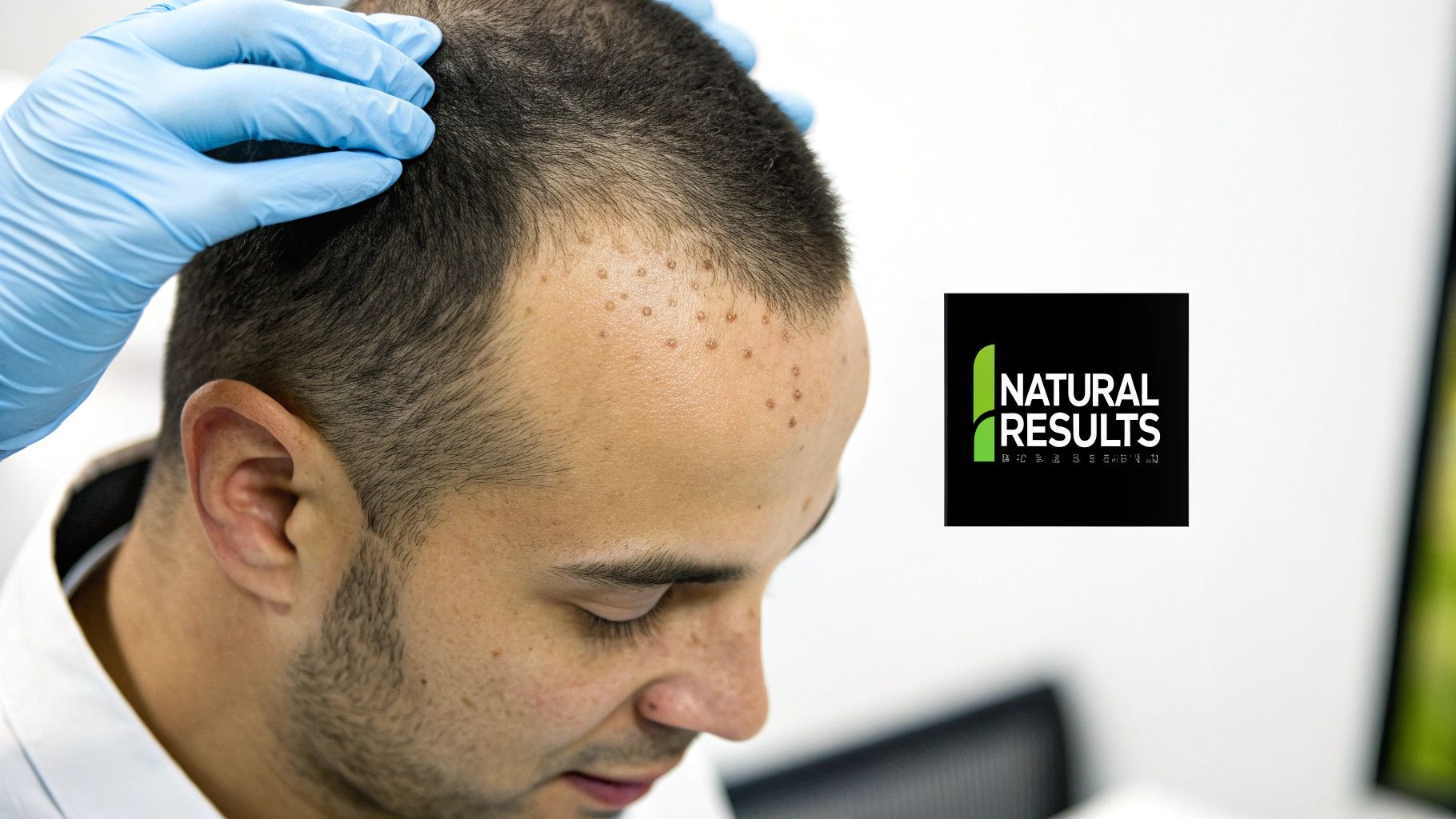
First things first, let's be clear: SMP isn't anything like a traditional body tattoo. It’s a sophisticated blend of artistry and technical skill, all aimed at tackling hair loss. Here in Western Australia, experienced practitioners like myself help men and women get their confidence back by crafting results that are genuinely indistinguishable from a real shaved head.
The aim isn't just to put some colour on a bald scalp. It’s about restoring a look that’s age-appropriate, flattering, and completely believable. Think about other forms of realism, like the principles behind creating stunningly realistic AI photos. Both disciplines rely on getting the subtle details, colour theory, and layering just right to create a convincing illusion.
The Core Elements of Realism in SMP
For SMP, realism is built on a few non-negotiable pillars. Every treatment has to be customised to you—your skin tone, your facial structure, your remaining hair. This is never a one-size-fits-all job. A great artist’s work blends so seamlessly with any existing hair that you can’t tell where one ends and the other begins.
So, what does it take to get a high-quality, natural outcome? It all comes down to these key details:
- The Right Pigment: We use specialised, carbon-based pigments that are engineered not to turn blue or green over time. They are designed to lighten and fade gradually, always maintaining a natural grey-scale tone.
- Realistic Follicles: The real magic is in creating tiny, multi-layered dots. We use varying sizes and shades to mimic the three-dimensional depth of actual hair follicles poking through the skin.
- A Believable Hairline: This is crucial. A skilled artist crafts a soft, feathered, or subtly defined hairline that perfectly suits your age and head shape. Unnaturally sharp or low hairlines are a dead giveaway of a bad job.
- Building Density Smartly: True density isn't achieved in one go. It’s built up carefully over multiple sessions, ensuring the final look has depth and doesn't look like a flat, painted-on "helmet."
The best SMP is invisible. It shouldn't draw any attention to itself. It just restores the frame to your face, giving the impression of a full head of hair that you’ve chosen to keep closely shaved.
Key Factors for Natural Hair Tattoo Results at a Glance
To make it simple, I've broken down the most critical elements for achieving an undetectable Scalp Micropigmentation result in this table.
| Element | Importance | What to Look For |
|---|---|---|
| Artist Skill and Experience | Extremely High | A specialised portfolio, glowing client reviews, and a clear artistic eye. |
| Pigment Colour Matching | Extremely High | Custom blending to perfectly match your unique skin tone and hair colour. |
| Natural Hairline Design | Very High | A soft, feathered, or defined design that suits your age and face shape. |
| Follicle Replication Density | Very High | Strategic layering over multiple sessions to create a realistic 3D effect. |
| Proper Aftercare | High | Following all post-session instructions to the letter for optimal healing. |
Getting these factors right is the difference between a good result and a great one. This guide will walk you through everything—from picking the right artist to understanding the treatment and aftercare—so your natural looking hair tattoo results stay looking fantastic for years to come.
The Art and Science of a Flawless Hair Tattoo
Getting truly natural-looking hair tattoo results is where skilled artistry meets precise, repeatable science. It's a delicate balance that separates an undetectable treatment from one that just looks… off. Let’s pull back the curtain on the exact techniques and materials that come together to create a world-class scalp micropigmentation outcome.
This process is so much more than just putting ink into the skin. It’s a deep dive into colour theory, facial anatomy, and understanding exactly how different pigments will settle and age in different skin types. The real goal is to create an illusion that holds up even under the closest scrutiny.
The Foundation of Realism: Pigment Selection
The single most important scientific piece of the SMP puzzle is the pigment itself. Unlike regular tattoo inks, which can be a cocktail of different colours and metals, proper SMP pigments are carbon-based. This is a complete non-negotiable for any practitioner worth their salt.
So, why is this so critical? Traditional inks are notorious for changing colour over time, often fading to a noticeable blue or green as they break down in the skin. SMP pigments, on the other hand, are engineered for stability. They are designed to simply lighten over many years, softening into a lighter grey tone without ever changing their core hue.
This stability is what keeps your results looking natural for the long haul. A skilled artist will even custom-blend shades to get a perfect match for your existing hair colour and skin undertones, creating a seamless transition that is totally believable.
Crafting a Natural and Age-Appropriate Hairline
The hairline is easily the most artistic part of the whole procedure. It frames your face and is the first thing people see. A badly designed hairline—whether it’s too sharp, sits too low, or just doesn’t fit your facial structure—is an instant giveaway that you've had work done.
A true artist weighs up a few key factors to build the perfect hairline:
- Facial Structure: Your brow line, temple points, and the overall shape of your head will dictate the most natural and flattering frame for your face.
- Age Appropriateness: Let's be honest, a mature man shouldn't have the razor-sharp, low hairline of a 20-year-old. The design has to look right for your age to be convincing.
- Personal Style: Some guys prefer a softer, feathered, and slightly receded look. Others want that cleaner, more defined "edge-up" style. It has to match the look you're going for.
Your artist will use subtle variations in dot placement and density to avoid that hard, "drawn-on" line. A well-done hairline genuinely looks like it grew there. You can learn more about how each follicle impression is meticulously placed in our guide on the thread-by-thread precision of scalp micropigmentation.
The goal of a great hairline isn't to look perfect; it's to look real. Real hairlines have subtle imperfections, softer edges, and a natural flow. That's the look a skilled practitioner painstakingly recreates.
Building Density with Strategic Layering
One of the biggest myths about SMP is that it's a one-and-done fix. The truth is, authentic depth and density are built up methodically over 3-4 sessions. This layering technique is absolutely essential for creating a three-dimensional effect that mimics real hair follicles.
Each session adds another layer of impressions, with the practitioner often using slightly different pigment shades and dot sizes. The first session is all about establishing the foundational shape and a light base. The next sessions are where the magic happens—we add the crucial density and darker tones, filling in the gaps to create the illusion of a full head of hair.
This multi-session approach also gives the artist a chance to see how your skin heals and how the pigment settles in. It allows for tiny adjustments along the way to guarantee a perfect final result. This careful, layered process is a key reason SMP has become such a trusted hair restoration solution right across Australia.
For many, it’s a non-invasive way to get their confidence back. In fact, recent findings show that 61.7% of patients combined SMP with hair transplants for superior density, reporting an impressive average satisfaction score of 4.5 out of 5. This layered approach is a cornerstone of achieving such positive, natural outcomes.
Finding the Right SMP Artist in Western Australia
Let’s be clear: choosing your Scalp Micropigmentation artist is the single most important decision you'll make. Everything—the realism, the quality, the longevity of your natural looking hair tattoo results—comes down to the skill of the person behind the machine. This isn't the time to bargain-hunt; it's an investment in yourself.
Here in Western Australia, the SMP scene has definitely grown, but that doesn't mean every practitioner is on the same level. You're not just looking for a technician who can follow a process. You need an artist. Someone who gets colour theory, understands the contours of a face, and appreciates the tiny details that make a treatment completely undetectable.
The Specialist vs. The Generalist
First up, you have to know the difference between a dedicated SMP specialist and a general tattoo artist. They might both use needles and ink, but that's where the comparison ends. A traditional tattooist is all about bold lines and vibrant colours. An SMP artist, on the other hand, is a master of subtlety, patiently creating thousands of tiny layered dots to replicate real hair follicles.
Going to a regular tattoo shop for SMP is one of the biggest mistakes you can make. They often use the wrong needles, push the pigment too deep, and work with traditional inks that can smudge into a blurry mess or, worse, turn blue over time. Always choose a practitioner who only performs SMP. Their entire focus is dedicated to perfecting this one, highly specialised craft.
Building Your Artist Checklist
When you start looking at artists, especially around Perth and greater WA, you need a solid checklist. Don't be shy about doing your homework—any truly professional artist will respect your diligence and be happy to answer all your questions.
You need to base your decision on hard evidence, not just a fancy website.
Here’s what you should be looking for:
- A Deep Portfolio of Healed Work: Fresh SMP always looks crisp. The real proof is in how it looks after it’s healed and settled. Insist on seeing clear, well-lit photos of clients from 6 months, 1 year, or even several years after their final session.
- Variety in Skin Tones and Hair Colour: A seasoned artist will have a portfolio full of different clients. This shows they know how to custom-blend pigments and adapt their technique for various skin types, from very fair to dark.
- Real, Verifiable Client Reviews: Check out reviews on independent sites like Google and Facebook. A long history of positive feedback about the artist's professionalism, the clinic's cleanliness, and the final results is what you want to see.
- A Clean, Professional Clinic: Hygiene is everything. When you go for a consultation, the place should be immaculate. Look for signs of proper sterilisation and a clinical, not casual, environment.
Trust your gut. An in-person consultation is your chance to see the space, meet the artist face-to-face, and get a feel for their professionalism. You should walk out feeling comfortable, understood, and confident in their abilities.
Key Questions to Ask During Your Consultation
Think of the consultation as your interview—you're hiring them for a very important job. Go in prepared with a list of questions and listen carefully to their answers. A true expert will explain their process clearly and set realistic expectations from the get-go.
Make sure you ask these questions:
- How do you design a hairline? A great artist doesn't just draw a sharp line and call it a day. They should discuss your age, face shape, and personal style, and talk about creating a soft, natural-looking hairline that will age well with you.
- Can I see healed photos of someone with my level of hair loss and skin tone? This is the best way to see if they're capable of getting the exact result you're hoping for.
- What kind of pigments do you use? You're looking for one answer: carbon-based pigments made specifically for SMP. These are stable and designed to hold their colour. If they mention using standard tattoo inks, it's a major red flag.
- How many sessions will it take, and what happens in each one? They should walk you through their multi-session approach, explaining how they build up density gradually and make adjustments at each stage for the most natural finish.
Finding a skilled local expert is the key to success. You can dive deeper into what the treatment involves in our comprehensive guide on SMP in WA. Having these conversations ensures you’re not just a number, but a partner in creating a result you'll be happy with for years to come.
Your SMP Journey from Consultation to Final Result
Taking the first step with Scalp Micropigmentation is exciting, but knowing exactly what’s ahead makes all the difference. From your first chat with an artist to seeing the final result, every stage is carefully mapped out to achieve those flawless, natural looking hair tattoo results. Think of it as a partnership that unfolds over several weeks.
This isn’t a one-and-done treatment. The process is designed to gradually build up density and colour in a controlled way. It’s a marathon, not a sprint, which gives us the flexibility to make adjustments and perfect the look at every turn. This methodical approach is the secret to an outcome that looks completely real.
This simple guide breaks down the path from doing your homework to booking your sessions.
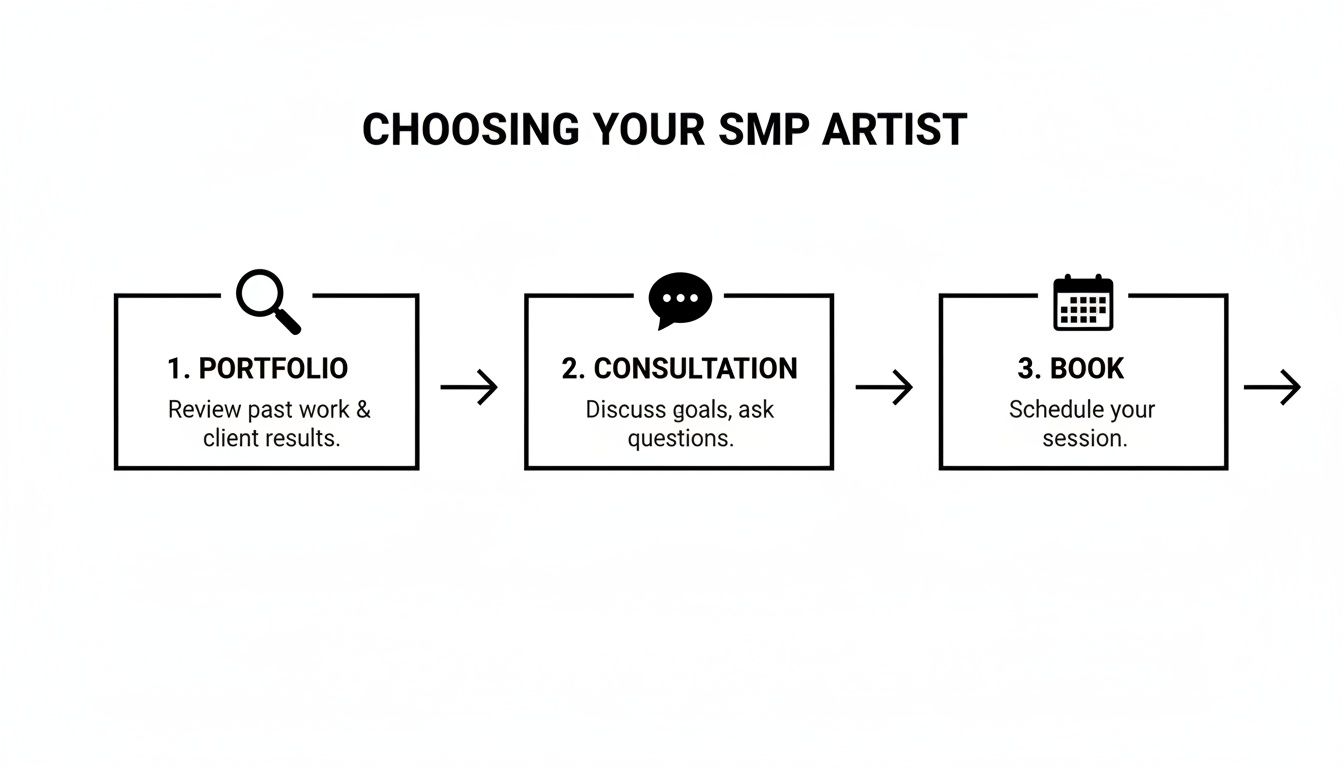
It all starts with solid research, followed by a vital consultation to get on the same page, and finally, scheduling the treatment that will bring your new look to life.
The Initial Consultation: Your Personalised Blueprint
Your SMP journey really kicks off with the consultation. This is so much more than a sales pitch; it's a strategic planning session. Your artist will get a feel for your hair loss pattern, analyse your skin type, and, most importantly, listen to what you want to achieve.
From there, they'll sketch out a potential hairline, give you a realistic idea of how many sessions you'll need, and provide a clear cost breakdown.
For example, a client here in Perth with an oily scalp needs a different technique compared to someone with dry skin. The artist might use a specific needle grouping or slightly alter the pigment depth to make sure it settles perfectly, especially with our local climate. This first meeting lays the entire foundation for a successful, tailored treatment.
Session One: Laying the Foundation
The first session is all about putting down the groundwork. Your artist will lock in the hairline design you both agreed on and start applying the first, lightest layer of tiny follicle impressions across the scalp. It won't look dark or dense just yet, and that’s completely by design.
The main goals for this session are:
- To map out the hairline and create the main framework.
- To see how your scalp responds to the pigment and the process.
- To establish a light, foundational layer that we’ll build on later.
Afterwards, your scalp will be a bit red for a day or two. Don’t be alarmed if the pigment looks quite dark at first—it will soften up significantly as it heals over the next 7-14 days.
Sessions Two and Three: Building Density and Detail
Your next couple of sessions, usually scheduled 10-14 days apart, are where the transformation really takes shape. With the foundation in place, your artist will now focus on adding serious density. They'll introduce slightly darker shades of pigment to fill in the gaps between the initial dots.
This layering technique is what creates that convincing 3D effect, mimicking the subtle tonal variations of real hair. It’s during these appointments that the artist will perfect the hairline, blend seamlessly into any existing hair, and make sure the coverage is absolutely even. You can dive deeper into what the process of getting a hair tattoo involves over on our blog.
That healing time between sessions isn't just a waiting game; it’s a critical phase. It lets the pigment settle into the dermis and shows the artist how the colour is truly developing on your skin, allowing for precise adjustments at the next appointment.
The demand for this kind of detailed, natural-looking work is surging. The global micropigmentation market is expected to grow by a CAGR of 7.87% to 8.3% between 2025 and 2033. It’s clear that people are looking for quality results.
Beyond the technical skill, a great SMP journey relies on a positive client experience from start to finish. Understanding how to measure customer experience is something all top clinics focus on. Your final session is where it all comes together—the finishing touches are made to ensure your new look is flawless from every single angle.
Long-Term Care for Lasting Results
Getting that incredible, natural looking hair tattoo is a huge win, but your part in the journey doesn't stop when you leave the clinic. To keep your SMP looking its best, you'll need a simple but consistent long-term care plan. It's a bit like protecting the paint on a new car—a little maintenance goes a long way in shielding it from the elements.
Thankfully, looking after your SMP is pretty straightforward. It really just comes down to a few key habits that will fight off premature fading and keep your scalp in top condition. Nail the aftercare, and your hair tattoo will stay sharp and defined for years.
Your Immediate Aftercare Checklist
The first few days after each session are absolutely crucial. This is when the pigment is settling in, and what you do (or don't do) has a massive impact on the final outcome. Your practitioner will give you a detailed list of instructions, and it’s vital you follow them to the letter.
For the first 4-5 days after your treatment, you have to be disciplined and avoid:
- Getting your scalp wet. That means no washing your hair, no swimming, and being extra careful when you shower.
- Heavy sweating. You’ll have to put the gym on hold for a few days. Saunas and steam rooms are also off-limits, as sweat can push the fresh pigment right out of your skin.
- Direct sun. If you have to be outside, wear a loose-fitting hat. A sunburn on a fresh treatment is the last thing you want.
- Touching or scratching. Your scalp will have thousands of tiny wounds. Let them heal on their own to prevent dislodging the pigment.
Sticking to these rules gives the ink the best chance to lock into the dermis, which is the foundation for a result that lasts. For a more detailed breakdown, have a look at our guide on the top tips to care for your scalp after SMP.
The Best Habits for Long-Term SMP Maintenance
Once your SMP is fully healed—usually about a month after your final session—things get a lot easier. The two biggest enemies of your hair tattoo over the long haul are UV radiation and dry skin. Your entire maintenance strategy should be focused on tackling these two things.
First up, get a good daily moisturiser. Keeping your scalp hydrated does more than just feel good; it makes the pigment look darker and more defined. It also stops dry, flaky skin from dulling the appearance of the individual follicle replications. A lightweight, non-greasy formula is your best bet.
But if there’s one habit to rule them all, it’s using sunscreen every single day. The sun’s UV rays break down pigment, fading your SMP just like they would a regular tattoo. A high-SPF, matte-finish sunscreen is your number one defence against fading.
Knowing When to Get a Touch-Up
While scalp micropigmentation is considered a permanent treatment, it does fade very slowly over the years. Most people find they’re ready for a quick touch-up every 3-6 years to bring back that original depth and sharpness. This isn't a complete redo—it's just a single session to refresh the colour.
How quickly you’ll need one depends on a few things, like your immune system, your lifestyle, and especially how well you’ve protected your scalp from the sun. We often see clients who are diligent with sunscreen go much longer between touch-ups.
Here in Western Australia, hair loss is a reality for many. Studies show around 50% of men over 50 experience noticeable thinning, which is why so many are turning to treatments like SMP. Because it lasts for 3-6 years before needing a simple refresh, it’s become the perfect low-maintenance solution for both men and women across WA.
Your Hair Tattoo Questions, Answered
Deciding on Scalp Micropigmentation is a big move, and it's totally normal to have a few questions running through your mind before you commit. Feeling confident and clued-in is the first step towards getting a result you’ll love.
Let's walk through some of the most common queries we get from clients. The goal here is to clear up any lingering doubts so you can make a decision that feels right for you.
Does Scalp Micropigmentation Hurt?
This is probably the number one question on everyone's list, and thankfully, the answer is usually a pleasant surprise.
The vast majority of our clients don't describe it as painful. It's more of a light, consistent tapping sensation. If you had to put it on a pain scale from 1 to 10, most people land somewhere between a 2 and a 4.
The needles we use are tiny and they only penetrate the skin very shallowly—nowhere near as deep as a traditional tattoo. While some spots like the temples or just above the ears can be a bit more sensitive, a good practitioner works quickly and efficiently to keep any discomfort to a minimum.
Will My Hair Tattoo Look Fake or Turn Blue?
This is a huge, and completely valid, concern. We've all seen bad tattoos, and the thought of one being on your head is daunting. But a professionally performed SMP treatment is a world away from a botched job. The secret to a natural look comes down to two things: the artist's skill and the quality of the pigments.
Here’s what prevents that dreaded "fake" look:
- Specialised Pigments: We don't use regular tattoo ink. SMP pigments are carbon-based and designed specifically for the scalp. This means they won't turn blue or green over time; they'll simply fade into a lighter grey tone after many years.
- Artistic Technique: An experienced artist knows that a real head of hair isn't one solid colour. They avoid that "helmet" look by meticulously varying the size, density, and shade of each replicated follicle. This creates a multi-tonal, 3D effect that looks just like real stubble.
A great SMP treatment should be undetectable. The point isn't for it to look like a tattoo; it's for it to look like you have a full head of hair that you've chosen to buzz down.
How Much Does a Natural-Looking Hair Tattoo Cost in Western Australia?
There's no single price tag for SMP because every treatment is customised to the individual. The final cost really depends on the extent of your hair loss and how much of your scalp needs to be treated.
Here in Australia, you can expect pricing to start from around $500 for smaller jobs, like adding a bit of density to a thinning crown. For a full-scalp treatment on someone with advanced hair loss (think a Norwood 6-7), the complete series of sessions typically costs between $2,200 and $3,200. It's a significant investment upfront, but it’s often a more permanent and cost-effective solution than a lifetime of medications or the high cost of a hair transplant.
Can I Still Grow My Hair Out with SMP?
Absolutely. One of the best things about Scalp Micropigmentation is that it doesn't damage your existing hair follicles or get in the way of any future hair growth. The pigment is placed in the upper dermis, which is much higher up than where the hair follicles live and grow.
SMP is incredibly versatile and works brilliantly in two main scenarios:
- The Shaved-Head Look: For men who are mostly bald or just prefer a clean buzz-cut, SMP creates a perfect illusion of a full head of closely shaved hair.
- Adding Density: For both men and women with thinning hair who like to keep it longer, SMP is a game-changer. We place tiny pigment dots on the scalp between the existing hairs, which minimises the colour contrast between your hair and skin. This makes your hair appear instantly thicker and fuller.
It's also smart to think about the long term. While SMP is designed to last for years, it's reassuring to know that removal is possible. If you're curious about how that works, you can read our detailed guide that explains if scalp micropigmentation can be removed.
Ready to see what Scalp Micropigmentation could do for you? At My Transformation, we're all about creating natural-looking results that restore confidence. Book your free consultation today, and let's create a personalised plan to get you there. https://www.mytransformation.com.au