

The Best At Home Teeth Whitening Products for a Brighter Smile
When it comes to the best at home teeth whitening products, there isn't one magic bullet for everyone. The best options—like whitening strips, gels with custom trays, and LED kits—tend to be the ones that deliver real results safely and conveniently. Ultimately, your perfect match comes down to your unique needs, how much you want to spend, and whether your teeth are on the sensitive side.
Your Guide to a Brighter Smile at Home
Walking down the dental aisle can be dizzying. With so many teeth whitening options staring back at you, it’s easy to feel a bit lost. This guide is here to clear up the confusion and help you find a system that actually fits your life and gets you closer to your smile goals. We'll get into how these products really work, what to look for on the label, and how to use them safely for the best results.
If you're thinking about brightening your smile, you're in good company. The quest for whiter teeth has become a staple in personal care routines for people all over the country.
Why At-Home Whitening is So Popular
The demand for easy, effective whitening solutions has absolutely exploded. This isn't just some passing fad; it's a real shift in how we approach cosmetic care, and the numbers back it up.
- Convenience: Let's be honest, being able to whiten your teeth while watching TV or getting ready for the day is a huge plus. No need to book a dental appointment.
- Affordability: At-home kits are a fraction of the cost of in-chair professional whitening, making a brighter smile much more accessible.
- Effectiveness: Today's products have come a long way. They are genuinely effective at lifting those common, everyday stains from coffee, tea, and red wine.
You can see this growing interest reflected in the market. In 2023 alone, the Australian teeth-whitening market pulled in around USD $71.2 million. Analysts are predicting that figure will climb to nearly USD $104.5 million by 2030, which shows just how many of us are investing in our smiles.
Our goal here is to pull back the curtain on the science, line up the most popular methods side-by-side, and give you the practical know-how to pick the right product with confidence. Seeing what's actually possible is also pretty inspiring; have a look at our teeth whitening gallery to see some real results. We're here to help you find the product that will truly boost your smile.
How At-Home Teeth Whitening Actually Works
Ever wondered what’s really going on when you stick on a whitening strip or paint on a gel? The science behind it is actually pretty simple. Imagine spilling coffee on a white shirt – some stains are just on the surface, while others have soaked deep into the fabric.
Your teeth are a lot like that. The outer layer, called enamel, is super hard but it's also porous, kind of like a sponge. Underneath that is a naturally more yellow layer called dentin. Over the years, things like coffee, red wine, and tea leave tiny coloured molecules that get trapped in the enamel's pores, which is what makes teeth look discoloured.
The Science of Stain Removal
Most at-home whitening kits rely on one of two key ingredients: hydrogen peroxide or carbamide peroxide. Both are what’s known as oxidising agents. When you apply them to your teeth, they start a chemical reaction that releases tiny oxygen molecules.
These little molecules are the real heroes. They dive deep into your enamel and break apart the chemical bonds that hold the stain molecules together. It's not about scrubbing or bleaching away the surface; it’s about dismantling the stains from the inside out. Once broken down, the discolouration is less concentrated, making your teeth look much whiter and brighter. If you want a deep dive into the chemistry, you can learn more about the truth about how hydrogen peroxide whitens teeth from dental experts.
The Key Takeaway: Whitening is a chemical process, not a scrubbing one. It works by safely breaking down years of built-up stains from inside your tooth's enamel to reveal its natural, lighter colour.
Surface Stains vs. Deep Stains
It's important to know that not all stains are created equal, and different products are built to tackle different problems. Figuring out what you're dealing with is the first step to getting great results.
-
Extrinsic Stains: Think of these as surface-level grime. They sit on the outside of your enamel and are usually caused by your daily habits—that morning coffee or evening glass of red wine. Whitening toothpastes can help polish some of these away, but products with peroxide are what really lift them off for good.
-
Intrinsic Stains: These are the tougher ones. They've settled deep inside the tooth, sometimes even reaching the dentin. This can happen as we age and our enamel thins, or from certain medications or even a knock to the tooth. Tackling these requires a stronger approach, like the gels, strips, or LED kits that use higher concentrations of peroxide to get deep inside the enamel.
Knowing what kind of stains you have helps you set realistic goals. Most at-home kits are fantastic for extrinsic stains, but those deeper intrinsic ones might need a bit more time and persistence. And if you're curious about non-chemical options, checking out guides on how to whiten teeth naturally can give you some great tips for keeping your smile bright. Armed with this knowledge, you can look at a product label and know exactly what you’re getting.
Walk into any chemist or supermarket, and you'll be met with a wall of at-home teeth whitening options. It's a lot to take in. With so many different products out there, figuring out which one is actually right for you can feel like a bit of a gamble.
Let's cut through the noise and break down the most popular methods, comparing them head-to-head so you can find the perfect match for your smile goals and daily routine.
First, it helps to understand what's happening on a microscopic level. Whitening isn't about scrubbing your teeth harder; it's a chemical process.
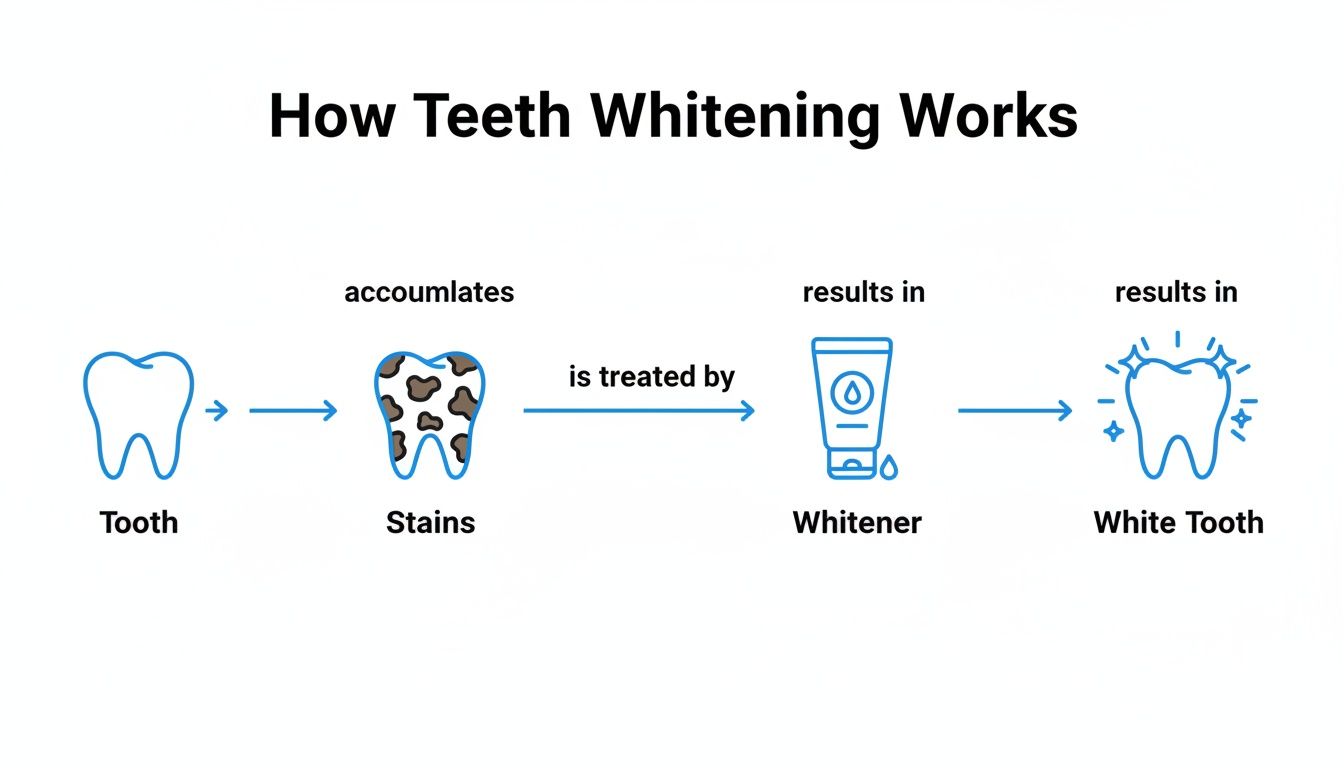
As you can see, the active ingredients get into the enamel and break down the discoloured molecules that cause stains. Knowing this helps make sense of why certain methods are more effective than others.
To give you a clearer picture, let's compare the most common at-home whitening solutions side-by-side.
At Home Teeth Whitening Methods at a Glance
This table breaks down the main options so you can quickly see how they stack up against each other.
| Whitening Method | How It Works | Typical Cost (AU) | Best For | Potential Downsides |
|---|---|---|---|---|
| Whitening Strips | Thin plastic strips coated with a peroxide gel are applied directly to the teeth. | $30 - $80 | Convenience seekers and those with mild, surface-level staining. | Can slip, miss crevices, and may cause uneven results. |
| Gels and Trays | A whitening gel is placed in a mouth tray that holds it against the teeth. | $50 - $150 | People wanting more significant results and even coverage. | Can be a bit messy; ill-fitting trays may irritate gums. |
| LED Light Kits | A whitening gel is accelerated by a blue LED light to speed up the stain removal. | $70 - $200+ | Individuals looking for the fastest, most dramatic results at home. | Higher initial cost; some find the mouthpiece cumbersome. |
| Whitening Toothpastes | Mild abrasives gently polish away surface stains during regular brushing. | $5 - $20 | Daily maintenance and preventing new stains from forming. | Won't change the intrinsic colour of your teeth. |
Each of these methods has its place, and the "best" one really depends on what you're trying to achieve, how much you want to spend, and what fits into your lifestyle.
A Closer Look at Each Method
Now, let's get into the specifics of how each one works.
Whitening Strips
For a lot of people, whitening strips are the first port of call. They're essentially thin, flexible bits of plastic coated with a peroxide-based whitening gel. You just peel them off the backing and stick them onto your teeth. Simple.
You typically wear them for about 30 minutes a day. The beauty is their convenience—you can pop them on while you're getting ready or watching TV. You'll usually start seeing a difference in a few days, with the final results appearing once you've finished the whole box.
- The Good: They are incredibly easy to use, pretty affordable, and you can find them just about anywhere.
- The Not-So-Good: Getting them to stick perfectly can be tricky. They can slip around, and because they're a flat strip on a curved surface, they often miss the little gaps between teeth, leading to a slightly patchy finish.
Gels and Trays
This is a step up from strips. With this method, you get a whitening gel and a mouth tray that looks a bit like a sports mouthguard. You squeeze the gel into the tray and then fit it over your teeth.
The tray’s main job is to keep that powerful gel in constant, direct contact with your entire tooth surface while keeping it away from your sensitive gums. This gives you much more even and consistent coverage than strips can manage. It’s a bit more involved, but the results often reflect the extra effort.
Because the trays are moulded to your teeth, they offer a more professional-style experience at home. This method is often recommended for those seeking more noticeable results than what standard strips can provide.
LED Light Kits
LED kits are where at-home whitening starts to feel a bit more high-tech. These systems pair a whitening gel with a blue LED light device. You apply the gel, pop the light-up mouthpiece in, and let it do its thing.
The whole idea is that the LED light "activates" the peroxide in the gel, accelerating the chemical reaction that lifts stains. It’s designed to give you more impressive results in a shorter time frame, kind of like a mini-version of a treatment you'd get at the dentist. If you're curious how they stack up against the real deal, you can get a sense of the professional teeth whitening cost and what it includes.
Whitening Toothpastes
Finally, we have the easiest option of all: whitening toothpastes. These are the ultimate set-and-forget method because they slot right into your existing daily routine.
Unlike the other products, whitening toothpastes work mainly by using mild abrasives to polish away surface stains from things like coffee, tea, and red wine. They're fantastic for keeping your teeth bright and preventing new stains from settling in, but they won't deliver a dramatic shade shift on their own.
Still, their convenience is king. In Australia, toothpaste was the heavyweight champion in 2023, making up about 33.15% of market revenue in the whitening category.
Safety First: Navigating Side Effects and Risks
Embarking on a teeth whitening journey is exciting, but let's be honest—that brilliant smile shouldn't come at the cost of your dental health. While the best at home teeth whitening products are generally safe when you follow the instructions, it’s smart to know about potential side effects and how to handle them.
Knowing what to expect means you can whiten your teeth effectively while keeping any discomfort to a minimum. The two most common things people run into are tooth sensitivity and gum irritation, and thankfully, both are usually temporary and easy to manage.
Managing Tooth Sensitivity
Ever felt that brief, sharp "zing" in your teeth after a whitening session? That's tooth sensitivity. It happens because the whitening agent temporarily opens the tiny pores in your enamel, which exposes the delicate nerve endings inside your teeth. It’s a completely normal reaction and usually disappears within a day or two.
To keep that sensitivity in check, here are a few simple strategies that really work:
- Use a desensitising toothpaste: Start swapping your regular toothpaste for one designed for sensitive teeth about a week or two before you plan to start whitening.
- Take breaks between treatments: You don't have to whiten every single day. Spacing out your sessions gives your teeth a chance to recover and settle down.
- Reduce application time: If a 30-minute session is causing discomfort, try cutting it back to 15 or 20 minutes. You'll still get results, just more comfortably.
These little adjustments can make a world of difference. For a deeper dive, you can learn more about managing teeth whitening side effects and what’s really going on inside your teeth.
Avoiding Gum Irritation
The other common issue you might notice is mild gum irritation. This usually happens when the peroxide-based gel makes contact with your gums or other soft tissues. The area might look a bit white for a short while or feel a little tender.
The secret to preventing this is all in the application. If you’re using trays, the trick is not to overfill them. For strips, just make sure they’re positioned squarely on your teeth and don't overlap onto your gums. Wiping away any excess gel with a cotton swab is also a great preventative move.
Important Note: Remember, whitening products are designed to work on natural tooth enamel. They won't change the colour of any dental work like crowns, veneers, or fillings. These will stay their original shade, which could create an uneven look if you whiten the teeth around them.
Who Should Avoid At-Home Whitening?
At-home teeth whitening isn't the right fit for everyone. Certain situations can increase the risks or just lead to disappointing results. It’s probably best to hold off on whitening if any of these apply to you:
- Existing dental issues: If you have untreated cavities, gum disease, or very worn enamel, whitening could make these problems worse.
- Pregnant or nursing women: It’s generally recommended to wait until after pregnancy and nursing are finished before starting any whitening treatments.
- Individuals with extensive dental work: As mentioned, whitening doesn't affect restorations. If you have multiple crowns or veneers on your front teeth, it’s probably not the best option.
Before you start any new whitening routine, the smartest first move is always a quick chat with your dentist. They can give your teeth and gums the all-clear for treatment and offer personalised advice, making sure your path to a brighter smile is both safe and successful.
How to Choose the Right Product for You
Ready to jump in? The secret to picking the right product isn't about finding the one "best" option on the market—it’s about finding the best fit for your unique smile. Think of it like a fitness plan; the perfect routine for one person might not suit another's goals, schedule, or starting point.
To find your perfect match, you just need to ask yourself a few key questions. This will help you cut through the noise and narrow down the choices from the huge range of best at home teeth whitening products out there.
Define Your Whitening Goals
First things first, what kind of stains are you up against? Are you trying to tackle stubborn, years-old discolouration from a daily coffee habit, or are you just looking to brighten up some light, recent surface stains?
-
For stubborn, deeper stains: You'll need something with a bit more oomph, like an LED light kit or a gel-and-tray system. These methods give the whitening agent enough contact time to really penetrate the enamel and break down those deep-set stains.
-
For light surface stains and maintenance: Whitening strips or a good-quality whitening toothpaste might be all you need. They're fantastic for zapping recent stains and keeping your smile bright after a more intensive treatment.
Next, get real about your lifestyle. How much time can you realistically dedicate to this each day? A quick 30-minute session with strips might be easy to squeeze in, but a more involved gel application could feel like a hassle. Honesty here is key to sticking with it.
Finally, think about your budget. It’s always tempting to grab the cheapest thing on the shelf, but investing a little more in a system with custom-fit trays or a reputable LED device can deliver much better, longer-lasting results. It might even save you money in the long run by avoiding repeat treatments.
Factor in Tooth Sensitivity and Lifestyle
Your tooth sensitivity is a massive piece of the puzzle. If your teeth already react to hot or cold, choosing a gentle formula is non-negotiable. Look for products that contain ingredients like potassium nitrate or fluoride, which help calm the nerves and strengthen your enamel.
If you have particularly sensitive teeth, we have a whole guide dedicated to helping you whiten safely and comfortably. You can learn more about teeth whitening for sensitive teeth in our detailed article.
It’s no surprise these products are taking off in Australia. An Australian Dental Association survey showed that around 22% of Australian adults are now using whitening products, which is an 8% jump from 2017. It points to a major shift towards at-home solutions, especially among women and younger adults aged 24-34. You can find more info on cosmetic dentistry trends in Australia.
By carefully weighing your stain type, lifestyle, budget, and sensitivity level, you can confidently choose a product that not only works effectively but also fits seamlessly into your life, making your journey to a brighter smile a successful one.
When to See a Professional Instead
As great as at-home teeth whitening products can be, it's important to know their limits. They offer fantastic convenience, but there are certain situations where a DIY approach just won't cut it, and it's time to bring in a dental professional.
At-home kits are brilliant for tackling surface stains—what we call extrinsic stains. Think of the daily culprits: coffee, tea, red wine, and certain foods. For those, these products often work wonders. But for discolouration that goes deeper, you might be left feeling a bit underwhelmed.
When Professional Help Is the Better Choice
Some types of tooth discolouration are just too stubborn for over-the-counter solutions to handle. Your dentist has access to much more powerful whitening agents and specialised equipment that are simply not safe for you to use on your own.
You should seriously consider booking a dental appointment if you're dealing with:
- Deep Intrinsic Stains: This is discolouration from within the tooth itself. It can be caused by certain medications (like tetracycline), an old dental injury, or even just your genetics. These stains are buried deep inside the tooth’s structure, far beyond the reach of a store-bought gel or strip.
- Significant Dental Work: Got crowns, veneers, or fillings on your front teeth? It’s crucial to remember that these restorations won’t change colour with whitening products. A dentist can create a coordinated plan to make sure your entire smile looks seamless and natural, not a mismatched patchwork.
- A Need for Speed: If you have a wedding, a job interview, or another big event coming up, nothing beats the speed and power of an in-chair whitening session. You can walk out with teeth several shades lighter in about an hour.
The biggest benefit of going pro is the expert oversight. A dentist will carefully protect your gums and the soft tissues in your mouth from the high-concentration bleaching agents, minimising sensitivity and ensuring a safe, even result. That’s a level of precision that a one-size-fits-all home kit just can’t promise.
A professional consultation isn't just about getting whiter teeth; it's a full oral health check-up to make sure whitening is a safe and effective option for you in the first place.
While at-home kits are a handy tool in your smile arsenal, for truly dramatic, controlled, and long-lasting results, it pays to explore professional teeth whitening treatments. Knowing when to DIY and when to call in an expert helps you set realistic expectations and ensures you get that brilliant smile you’re aiming for.
Got Questions About At-Home Teeth Whitening?
It’s completely normal to have a few questions pop up, even when you think you have your whitening plan sorted. Getting clear, simple answers can make all the difference, helping you stick with it and get the brilliant results you’re after.
Let's dive into some of the most common things people ask.
How Long Will My Whiter Smile Actually Last?
This is the million-dollar question! Your results can stick around for anywhere from a few months up to a year, but it really boils down to your lifestyle. If you love your daily coffee, tea, or red wine, or if you smoke, you'll find that new stains start to creep in much faster.
The secret to keeping that brightness locked in is maintenance. A quick touch-up treatment every few months, combined with a good quality whitening toothpaste for daily use, will go a long way in preserving all your hard work.
Think of it like this: you wouldn't get your car detailed and then drive it through the mud. Protecting your bright smile from stain-causing habits is just as important.
Can I Whiten My Crowns, Veneers, or Fillings?
This is a big one, and the answer is a firm no. Whitening products are designed to work only on natural tooth enamel. They simply won’t change the colour of any dental work you have, whether it's a crown, veneer, or a simple filling.
If you go ahead and whiten the teeth around these restorations, you could end up with a patchy, mismatched look. Your natural teeth will get brighter, but your dental work will stay the exact same shade it's always been. It's always best to have a chat with your dentist before starting any whitening treatment if you have existing dental work.
Is Charcoal Toothpaste a Safe Way to Whiten?
Charcoal toothpaste has been everywhere lately, but most dental professionals urge caution. The issue is that many of these products are incredibly abrasive. Instead of chemically lightening the tooth, they work by physically scraping stains off the surface.
Over time, that harsh scrubbing can wear away your precious enamel. Not only can this make your teeth super sensitive, but it can also expose the naturally yellowish dentin layer underneath, which ironically makes your teeth look darker, not whiter. For a method that's both safe and proven to work, stick with peroxide-based products.
Ready to start your journey to a brighter, more confident smile? My Transformation offers professional-grade solutions designed for safe and effective results at home. Explore our teeth whitening options today at https://www.mytransformation.com.au.