
concealing your scars with scalp tattoos: A practical guide
Dealing with scars on your scalp—whether from surgery, an old injury, or a hair transplant—can be a constant source of frustration. Thankfully, concealing your scars with scalp tattoos offers a remarkably effective way to reclaim your confidence. This isn't just about covering something up; it's a specialised technique called scalp micropigmentation (SMP) that creates a truly natural-looking illusion of real hair follicles.
The goal is to blend the scar tissue so perfectly with the surrounding scalp that it becomes virtually invisible.
How Scalp Tattoos Make Scars Disappear
It’s important to understand that scalp micropigmentation is worlds away from a traditional tattoo. SMP is a highly sophisticated cosmetic procedure that focuses on mimicking the look of tiny, individual hair follicles. A trained artist uses micro-fine needles to place minuscule dots of pigment into the very upper layer of your skin.
This isn't a quick, one-and-done process. It's a meticulous layering of impressions that, session by session, builds up the appearance of hair density and completely camouflages the scar.
The real skill comes in creating a three-dimensional effect. Imagine you have a flat, pale scar from a hair transplant. A skilled SMP artist won't just colour it in. Instead, they'll carefully layer different shades of pigment, precisely matching your own hair colour and skin tone. This ensures the treated area looks like it's full of actual hair follicles, not like a flat patch of ink.
The Nuances of Working on Scar Tissue
Scar tissue is a different beast compared to healthy skin. It's often thicker, has less elasticity, and can absorb pigment in unpredictable ways. This is exactly why you need a specialist who understands these challenges.
- Choosing the Right Pigment: An experienced artist will use stable, carbon-based pigments. These are crucial because they're designed not to change colour over time, which is a common problem with standard tattoo inks, especially on scar tissue.
- The Power of Layering: You can't rush perfection. The process is usually spread across 2-4 sessions. This gradual approach allows the artist to see how your specific scar tissue is healing and responding to the pigment, making adjustments along the way for a seamless blend.
- Precision Needle Control: Depth is everything. A skilled technician has pinpoint control over the needle to avoid "blowouts"—where the pigment spreads unevenly under the skin. They'll constantly adjust their technique to match the unique texture of your scar.
Beyond just the physical concealment, many people find that finally addressing a visible scar with SMP provides a massive boost to their overall well-being. If you're looking for other ways to build your inner confidence, you might find it helpful to explore some self-esteem building activities.
A Note on Scalp Micropigmentation vs. Traditional Tattoos
When people hear "scalp tattoo," they often picture a standard tattoo parlour. But SMP is a completely different discipline, especially for scar work. Here’s a quick breakdown of why that matters.
Scalp Micropigmentation vs Traditional Tattooing for Scars
| Feature | Scalp Micropigmentation (SMP) | Traditional Tattoo |
|---|---|---|
| Purpose | To replicate hair follicles and create an illusion of density. | Artistic expression with lines, shading, and solid colours. |
| Pigment | Carbon-based, stable pigments that resist colour change. | A wide range of coloured inks that can fade or change over time. |
| Needle Depth | Very shallow, into the upper dermis, to keep dots crisp. | Deeper penetration, which can cause pigment to spread ("blowout"). |
| Technique | Pointillism with micro-needles to create tiny follicle dots. | Lines and shading using various needle configurations. |
In short, using a traditional tattoo artist for scar camouflage on the scalp is a recipe for an unnatural, blotchy result. SMP is the only method designed specifically for this kind of detailed cosmetic work.
The rise of SMP in Australia has led to clinics focusing specifically on scar concealment. You can now find specialised centres in major cities like Sydney and Perth, meeting the growing demand from people wanting to cover marks from FUT and FUE transplants. To get a better handle on the different types of scars from these procedures, take a look at our guide to hair implant scars.
Is Your Scar Actually Ready for SMP?
Before we even talk about needles and pigment, let's address the most important question: is your scar ready for the treatment? I’ve seen it happen too often—someone rushes into scalp micropigmentation, and the results just don't hold up. You can end up with patchy colour, poor pigment retention, or even more irritation.
The biggest factor here is scar maturity. A scar has to be completely healed before an artist should go anywhere near it. As a rule of thumb, you should wait at least 12 months from the date of the surgery or injury. This gives the tissue time to settle, soften, and lose that angry red or purple colouring, eventually fading to a pale, whitish tone. If your scar is still pink, feels raised, or is tender when you touch it, that’s your body telling you it needs more time.
Telltale Signs of a Ready Scar
So, how do you know for sure? Think of it like a quick readiness check. The ideal scar for SMP will tick these boxes:
- It’s Flat and Smooth: Scars that are raised and bumpy (hypertrophic) or sunken in (atrophic) are a whole different ball game. They don’t accept pigment evenly, and you’ll need an artist who has specific experience with complex scar tissue to get a good result.
- The Colour is Pale: When the redness is gone, it means the inflammation has subsided and the blood flow has returned to normal. This is exactly what we want for predictable healing after the SMP sessions.
- It’s Not a Keloid: This is a big one. Keloid scars, which grow beyond the original wound's boundaries, are generally not suitable for SMP. The tattooing process can actually trigger more keloid growth, making the problem worse, not better.
If you're trying to figure out if SMP is the right path for you, this decision tree can help you visualise the process.
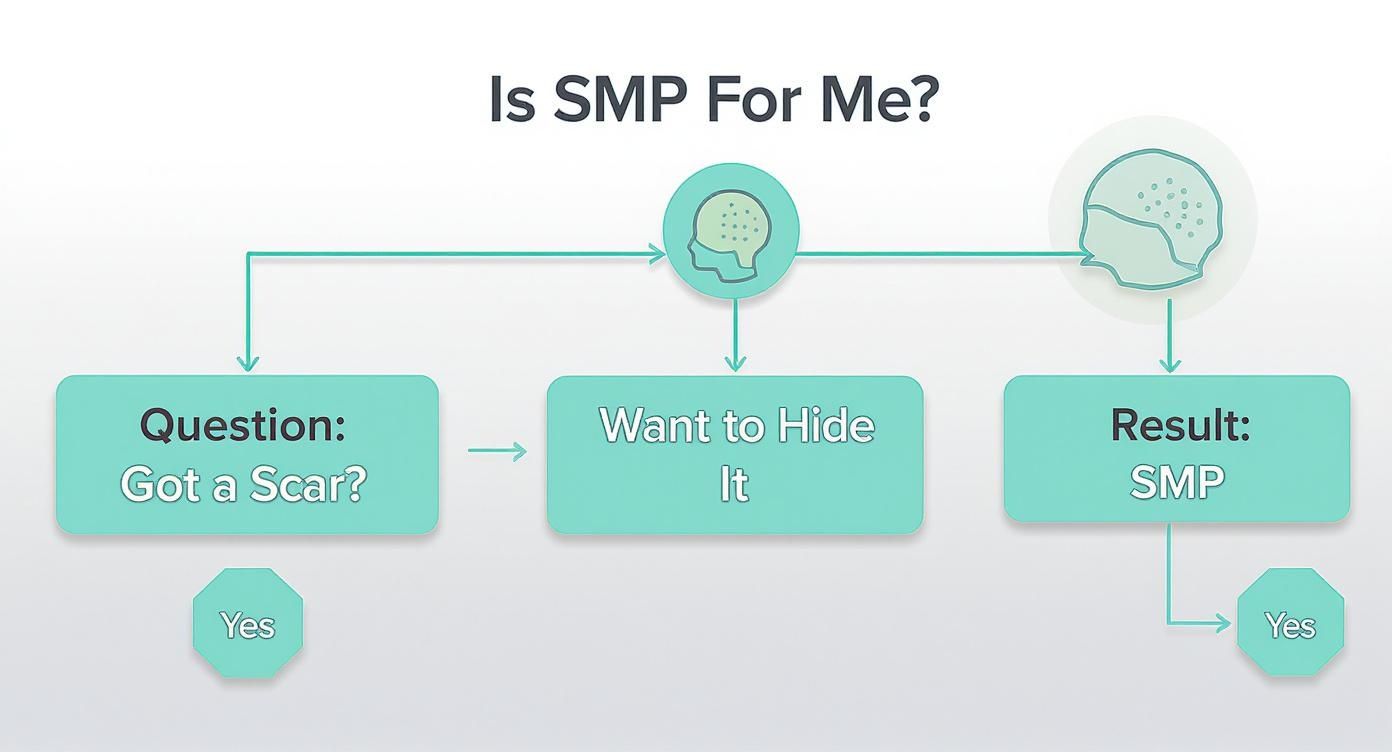
It really just breaks down the core reason people choose SMP—it's an incredible concealment tool when you’re tired of a scar being the first thing you see in the mirror.
Here's the bottom line: patience is your best friend. A fully healed, settled scar gives your artist the perfect canvas to work on, allowing them to create a seamless blend that’s virtually undetectable. This is especially true for marks left by procedures like FUT or FUE; we go into more detail on assessing a hair transplant scar in another guide.
It’s also worth remembering that SMP isn't the only option out there. To get the full picture, it’s a good idea to explore various scar revision techniques that can sometimes be used before or alongside scalp micropigmentation.
Finding the Right SMP Specialist in Australia
When it comes to using scalp micropigmentation to hide scars, the final result really comes down to one thing: the skill of your practitioner. This isn't a job you'd hand over to a regular tattoo artist. You need a specialist who truly understands the unique challenges of working with scar tissue, as it takes on pigment in a completely different way to healthy skin.
Your search should always begin with a deep dive into their portfolio. Don't just glance at it—look for high-resolution before-and-after photos of clients whose scars look like yours. It makes a huge difference whether you have a long, linear FUT scar or tiny, scattered FUE dots. If their gallery is full of amazing density work on healthy scalps but has no scar examples, they might not be the right fit for you.
Questions to Ask During Your Consultation
Once you've shortlisted a few artists, the consultation is your time to really dig in and understand their approach. Don't be shy about asking specific, detailed questions. This is your chance to see if they genuinely have the experience you need for scar camouflage.
Here's what I'd recommend asking:
- How do you approach blending pigments to match not just my hair colour, but also the different tones within the scar tissue itself?
- What’s your specific technique for avoiding pigment 'blowouts'? This is a common risk with unpredictable scar tissue.
- Could you walk me through the hygiene and safety protocols you have in place at your clinic?
A real specialist will love these questions. They should be able to confidently explain their strategy for layering pigment across several sessions, building up density gradually to make sure the scar blends in perfectly.
SMP has become incredibly popular in Australia, which is great for choice but also means you have to be more careful. The local tattoo market, which SMP is part of, was valued at around AUD 37.16 million and is expected to keep growing. You can read more about the growth of the Australian tattoo market to get the full picture.
This boom really highlights why it's so important to choose a certified and insured professional who only uses stable, high-quality carbon-based pigments. Finding the right artist is the most critical step, and our guide on finding scalp micropigmentation near you can give you a head start.
What to Expect During Your SMP Sessions
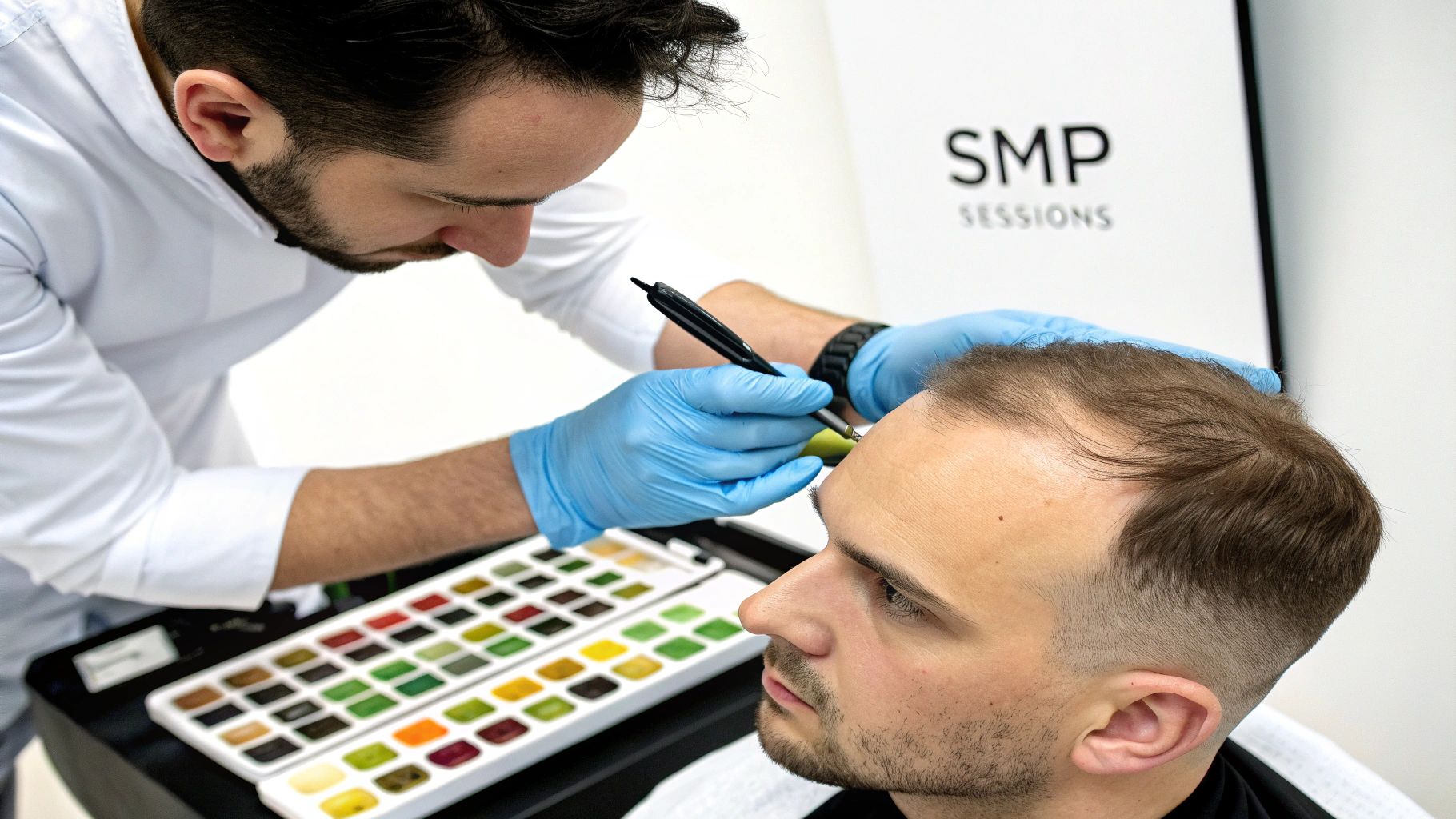
Knowing what’s involved in using scalp tattoos to conceal your scars can make the entire experience much smoother. It’s not a one-and-done deal; think of it as a carefully planned project to get you a natural, undetectable finish.
Everything kicks off with a detailed chat. Your specialist will get up close and personal with your scar, map out the area we'll be working on, and start mixing pigment shades to get an exact match for your skin tone and hair colour. This first meeting is where the magic really begins, as we design a game plan just for you. A long, straight FUT scar needs a completely different approach than a bunch of small, scattered FUE dots, for instance.
The Multi-Session Approach
One thing I always stress to clients is that scar tissue is tricky. It doesn’t hold pigment the same way healthy skin does, which is why we can't rush it. A gradual approach is the only way to guarantee a great result.
Most scar camouflage treatments take between 2-4 sessions. We'll space these out by a few weeks to give your skin time to heal and for the pigment to settle in properly.
This step-by-step method gives us total control over the finished look.
- Session 1: This is all about laying the groundwork. I'll apply the first layer of pigment, creating a soft base. This session is also a bit of a test, letting me see exactly how your scar tissue reacts to the ink.
- Following Sessions: From here on, it's about building on that foundation. We'll add more layers to increase the density, fine-tune the colour, and make sure everything blends seamlessly with the surrounding hair.
This layering is the secret sauce for a result that looks completely real. It lets me make tiny adjustments along the way, ensuring the scar simply vanishes into your scalp.
What a Session Feels Like
So, what does it feel like? I use a specialised machine with a micro-fine needle to place each tiny dot of pigment with precision. Most people tell me it’s more of a light, repetitive pricking sensation than the sharp pain you might associate with a regular tattoo.
I’ll work meticulously across the scar tissue, always checking in to make sure you're comfortable. Each session is another step toward that flawless finish we're aiming for.
Long-Term Aftercare for Your Scalp Tattoo
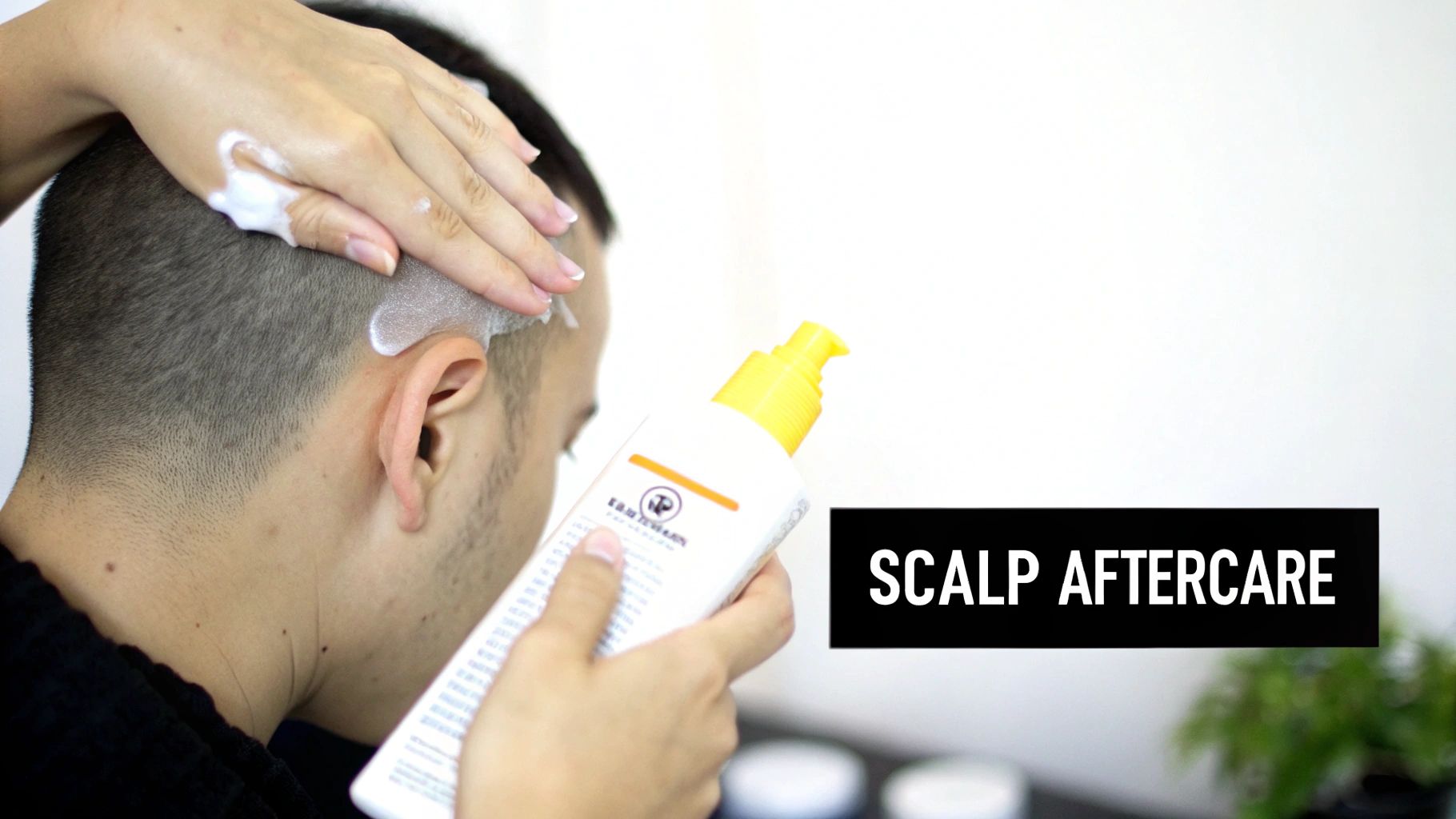
Getting that flawless result and finally concealing your scars with scalp tattoos feels incredible, but the job isn't quite done. Protecting that investment for the long haul is just as crucial as the treatment itself. Your aftercare journey really begins the moment you step out of the clinic, and it has two distinct phases: the immediate healing and the ongoing maintenance.
Right after your session, especially for the first few days, your scalp is at its most sensitive. It's absolutely vital to keep the area dry. That means no washing, steering clear of sweaty gym sessions, and definitely avoiding any harsh shampoos that could irritate the skin and mess with the fresh pigment.
Protecting Your Pigment for Years to Come
Once everything has healed up, your game plan shifts to long-term preservation. The number one enemy of your scalp tattoo is, without a doubt, the sun. Over time, UV radiation will break down the pigment, causing it to fade and lose that sharp, defined look we worked so hard to achieve.
Sun protection isn't just a suggestion; it’s non-negotiable. I always tell my clients to think of their scalp as a piece of art that now needs to be properly shielded.
- Daily Sunscreen is a Must: Get into the habit of applying a broad-spectrum SPF 50+ sunscreen to your scalp every single day. Yes, even when it's overcast.
- Hats are Your Best Friend: If you’re going to be outside for a while, a hat offers the most effective physical barrier against the sun's rays.
A well-moisturised scalp doesn't just feel better—it makes the pigment look richer and more vibrant. A light, non-greasy daily moisturiser will keep the skin supple and your SMP looking its absolute best.
By sticking to a simple routine of sun protection and moisturising, you can ensure your scar concealment remains undetectable and sharp for many years. For a deeper dive, check out our top tips to care for your scalp after SMP, which lay out an excellent long-term strategy.
Got Questions About Scalp Tattoos for Scars? We've Got Answers
Even after getting the rundown on the process, you've probably still got a few things on your mind. That's completely normal. Getting straight answers to your questions is the best way to feel confident about your decision to conceal scars with SMP.
Let's dive into some of the most common queries we hear from clients.
Does It Hurt to Tattoo Over a Scar?
Pain is always a big question, but honestly, most people find the process very manageable. Think of it more like a light, repetitive pricking sensation, not the deep, intense feeling you'd get from a traditional tattoo.
Scar tissue can sometimes be a bit more sensitive, but an experienced artist knows how to adjust their technique to keep you as comfortable as possible. We've worked on all types of scars and know how to navigate them gently.
How Much Does SMP for Scars Cost in Australia?
The cost really depends on the size and complexity of the scar we're working on. For a small, straightforward area, you might be looking at a starting point around the $500 mark.
On the other hand, concealing a long FUT scar requires a lot more intricate work and could cost $2,000 or more. Any good clinic will give you a clear, no-obligation quote during your initial consultation so you know exactly what to expect.
The ultimate goal is a result that looks completely natural. A skilled artist will use multiple shades of pigment and advanced layering techniques to create a 3D effect that perfectly mimics surrounding hair follicles, making the scar virtually disappear into the hairline.
How Long Does a Scalp Tattoo Last on Scar Tissue?
SMP is designed to be a long-lasting solution, but it will naturally soften and lighten over time. Most clients pop back in for a quick refresh session every 4-6 years to keep the colour looking dense and fresh.
The single biggest factor in making your SMP last? Sun protection. Seriously, keeping your scalp shielded from UV rays will make a massive difference.
It's interesting to see how mainstream tattooing has become in Australia, which has really helped normalise cosmetic procedures like SMP. A recent survey showed that 43% of Australians have at least one tattoo, and about 40% of them got their first one at age 26 or older. This lines up perfectly with the clients we see looking for mature, confidence-boosting solutions like scar concealment. You can read more about these Australian tattoo statistics online if you're curious.
It's also natural to wonder if the treatment is truly permanent. While SMP is built to last, it's reassuring to know there are options if you ever want a change. We go into all the details in our article about whether scalp micropigmentation can be removed.
At My Transformation, we're dedicated to helping you find the perfect solution for your hair loss and scar concealment needs. Let us help you regain your confidence. Find out more at https://www.mytransformation.com.au.