
Can hair dye cause alopecia? can hair dye cause alopecia insights
It's the question that runs through your mind when you see a few too many strands in the shower drain after a salon visit: can hair dye actually cause hair loss?
The short answer is yes, but it’s rarely as straightforward as that. For the most part, what people experience isn't true, permanent alopecia. It's usually a case of severe hair breakage that looks a lot like thinning, which can be just as distressing.
Hair Dye and Hair Loss: What's Really Going On
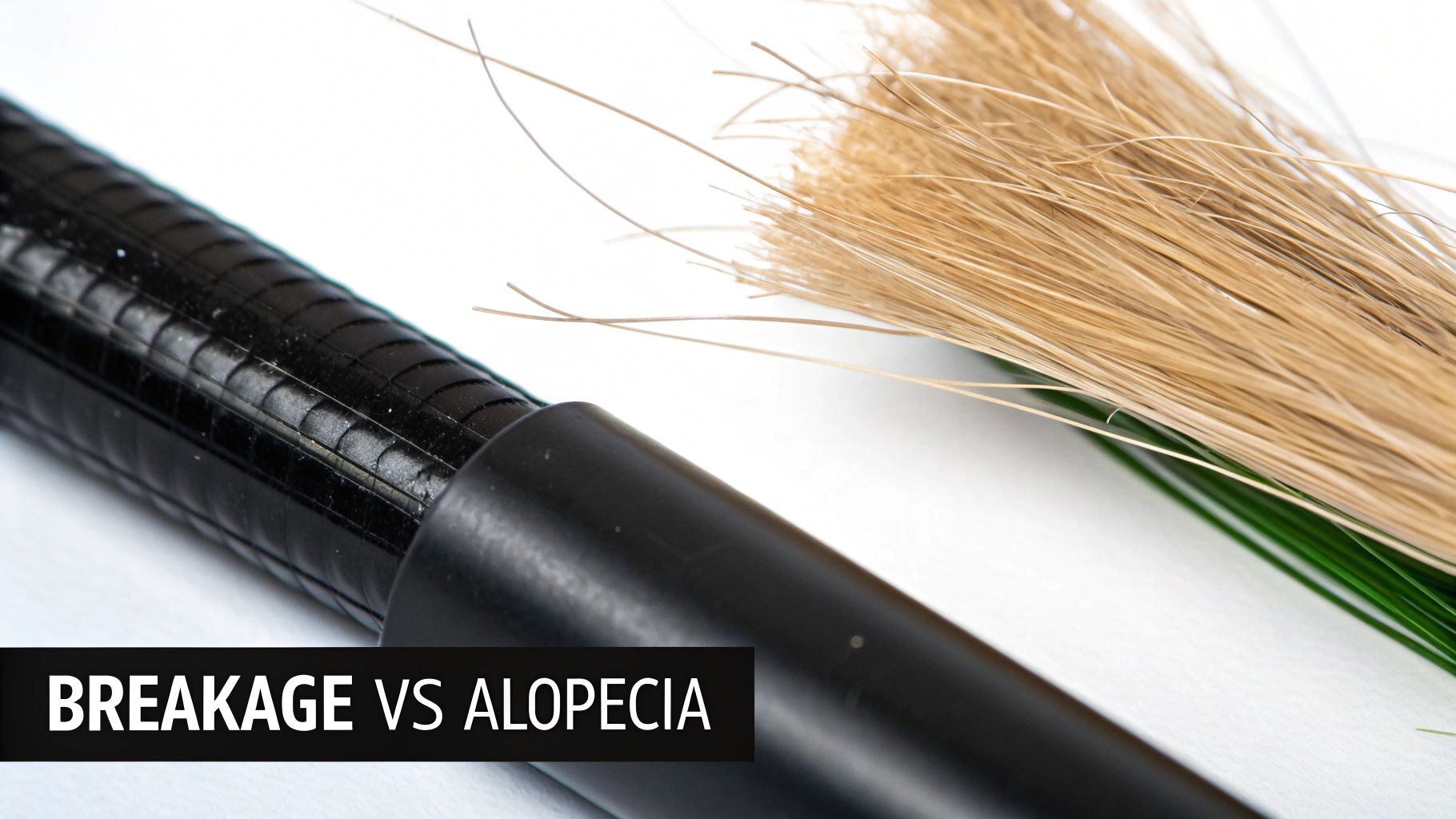
That initial panic after colouring your hair is completely understandable. But before jumping to conclusions, it’s vital to know the difference between hair breakage and true hair loss (alopecia). Getting this distinction right is the first step to figuring out what's happening on your scalp.
Breakage vs. True Alopecia
I like to think of hair like a plant in a garden. Hair breakage is like snapping a flower stem. The stem is damaged and shorter, but the root system underground is perfectly fine and will grow a new flower. The harsh chemicals in hair dyes can weaken the hair shaft, making it fragile and easy to snap off mid-length. This gives the illusion of thinning, but the follicle—the root—is unharmed and will continue to produce new hair.
True alopecia, however, is like poisoning the soil and killing the plant's roots. It's a condition where the hair follicle itself is damaged, inflamed, or scarred to the point where it can no longer grow hair. This is a much more serious problem and, in very rare instances, can be triggered by severe chemical burns or allergic reactions to hair dye.
The Different Ways Hair Dye Can Affect Your Hair
For the overwhelming majority of us who colour our hair, a clinical alopecia diagnosis is not on the cards. The biggest risk is simply doing some structural damage to the hair shafts you already have. Still, it pays to be aware of the full spectrum of possibilities.
Here's a quick look at what can happen:
- The Most Common Scenario: Your hair becomes dry, brittle, and snaps more easily. This is definitely manageable with the right aftercare, but it can make your hair look thinner than it is.
- A Less Common Possibility: You might experience temporary shedding, a condition called telogen effluvium. This can be triggered by scalp stress from a bad chemical reaction, knocking your hair's growth pattern out of sync. You can learn more about how this works by reading up on the hair growth cycle.
- The Rarest Outcome: In extreme cases, a severe chemical burn from improperly applied dye can destroy the hair follicles, leading to permanent hair loss known as scarring alopecia.
To make it clearer, here's a quick summary of how hair dye can impact your hair's health.
Hair Dye's Impact on Hair Health at a Glance
This table breaks down the potential issues, from the common to the extremely rare.
| Type of Hair Issue | What Happens | Is It Alopecia? | Is It Permanent? |
|---|---|---|---|
| Breakage | The hair shaft weakens and snaps. | No. It's damage, not a follicular issue. | No. The follicle is healthy and will grow new hair. |
| Telogen Effluvium | Scalp stress pushes more hairs into the shedding phase. | Yes, a temporary form. | No. Hair growth typically returns to normal. |
| Allergic Dermatitis | An allergic reaction causes scalp inflammation. | Can lead to temporary hair loss if severe. | No, if the reaction is treated and the allergen avoided. |
| Chemical/Scarring Alopecia | Severe burns from chemicals destroy the hair follicle. | Yes, a permanent form. | Yes. Follicle destruction is irreversible. |
As you can see, the most severe outcomes are exceptionally rare.
The key takeaway is this: while hair dye can cause forms of hair loss, the type and permanence of that loss vary wildly. Most problems are about damage to the hair shaft, not permanent destruction of the follicle.
By understanding this difference, you can take smart, practical steps to protect your hair while still enjoying the fun and confidence that a fresh new colour can bring. Let's walk through exactly how to do that.
How Hair Dye Chemically Alters Your Hair and Scalp
To really get to the bottom of the link between hair dye and hair loss, we need to look at what's happening at a chemical level. It’s not just a simple coat of paint. Colouring your hair involves a powerful chemical reaction that’s designed to permanently change the pigment deep inside each strand.
Think of your hair’s outer protective layer, the cuticle, like the tightly closed scales of a pinecone. To let the new colour in, permanent dyes rely on potent chemicals like ammonia to pry those scales open.
This is the first and most aggressive step, and it’s where the trouble often starts. With the cuticle forced open, hydrogen peroxide gets to work, bleaching out your natural melanin. This creates a fresh, blank canvas for the new colour to stick to.
But this process fundamentally changes the hair’s structure for good. That "pinecone" never quite seals up properly again, leaving your hair more porous, weaker, and much more likely to snap and break.
The Impact on Your Scalp
This chemical onslaught doesn't just stop at the hair. Your scalp is right there in the firing line, too. The very same ammonia and peroxide that are so good at changing hair colour can be incredibly harsh on the sensitive skin on your head.
The result can be anything from mild irritation and dryness to serious inflammation. For some, it's a minor inconvenience. For others, this irritation is severe enough to throw the entire hair growth cycle out of whack. The chemical fallout from hair dye often leads to irritation, highlighting the hidden link between inflammation on scalp hair loss.
Think of your scalp as the soil in a garden. If the soil becomes inflamed or irritated, the plants (your hair follicles) can't function properly. This disruption can trigger a temporary shedding phase known as telogen effluvium.
The Chain Reaction of Damage
It’s a real domino effect. The chemicals weaken the hair strand itself, leading to breakage that can easily be mistaken for thinning. At the same time, they can irritate the scalp, which might trigger temporary shedding from the root.
Here’s a quick breakdown of how the damage builds up:
- Weakened Cuticle: The lifted, damaged cuticle can’t hold onto moisture, which leads to chronic dryness and brittle hair.
- Protein Loss: The dyeing process can strip away the keratin proteins that give hair its strength, making it feel mushy when wet and incredibly fragile when dry.
- Scalp Stress: Ongoing inflammation creates an unhealthy environment for your hair follicles, and the symptoms can sometimes look like other scalp issues. For instance, you can learn more about how dandruff can cause hair loss to see just how interconnected scalp health is to hair retention.
While these chemical reactions are a necessary evil for permanent colour, understanding them is your best defence. It really drives home why things like proper application, choosing quality products, and diligent aftercare aren't just nice-to-haves—they're absolutely critical to keeping your hair and scalp healthy.
The Different Types of Hair Loss Caused by Colouring
When people ask, "can hair dye cause alopecia?", they're usually picturing one specific, dramatic type of hair loss. But the reality is a bit more nuanced. Hair loss linked to colouring isn't a one-size-fits-all problem; it can show up in several different ways, from simple hair snapping off to more complex reactions happening at the scalp.
Figuring out these differences is the first step to understanding what might be going on with your own hair. The issues generally fall into three main buckets, each with its own triggers and seriousness.
Chemical Breakage: The Most Common Culprit
More often than not, what people think of as "hair loss" from dyeing isn't true alopecia from the root. It’s actually chemical breakage. This is what happens when harsh chemicals, especially the bleach and ammonia found in permanent dyes, attack the hair shaft and weaken it to its breaking point.
Think of it like a dry, brittle twig—it doesn't take much to make it snap. Over-processed hair becomes incredibly fragile, and everyday things like brushing or even washing can cause it to break off. This leaves you with a thinner look and lots of short, flyaway pieces, but the good news is the follicle itself is usually unharmed and keeps growing new hair.
This is all about how dyes work. To change your hair colour, the chemicals have to force their way past the hair's protective outer layer (the cuticle) to get to the pigment inside.
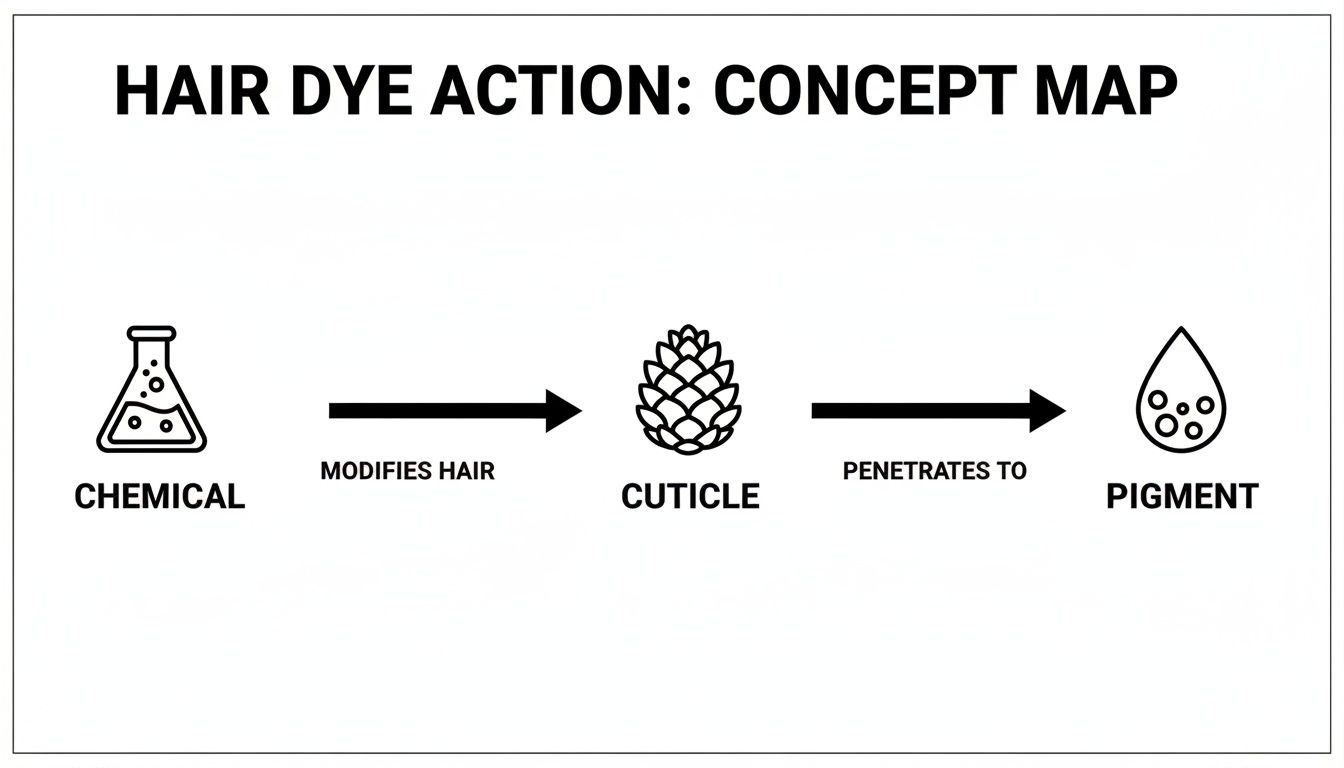
While this process is necessary to get the colour in, it’s also what compromises the hair’s strength, setting the stage for breakage.
Allergic Contact Dermatitis: An Inflammatory Response
Sometimes the problem isn't with the hair strand at all, but with the scalp. You could be experiencing allergic contact dermatitis, which is an immune reaction to an ingredient in the dye. The most frequent offender is a chemical called paraphenylenediamine (PPD), found in many darker hair dyes.
An allergic reaction can trigger intense itching, redness, swelling, and even blisters across the scalp. All that inflammation creates a very unhealthy environment for your hair follicles. It can disrupt their growth cycle and sometimes lead to a temporary shedding phase known as telogen effluvium.
Here, it's the body's over-the-top reaction to an allergen that's directly causing the hair to fall out. It can be quite alarming, but this type of hair loss is typically temporary. Once the scalp heals and you avoid the trigger chemical, your hair should return to its normal growth pattern. It's worth remembering that many women experience thinning for various reasons; you can explore the potential causes and treatment options for female hair thinning and balding to see the bigger picture.
Scarring Alopecia: The Rarest and Most Severe Outcome
The most serious, and thankfully the rarest, consequence is scarring alopecia, also known as cicatricial alopecia. This can happen when the chemicals in a hair dye cause a severe burn on the scalp.
This is a worst-case scenario, usually resulting from a product being way too strong, left on for far too long, or applied to a scalp that was already damaged or sensitive. The chemical burn is so intense that it completely destroys the hair follicles, replacing them with permanent scar tissue. Once that happens, hair can never grow back in that area.
This irreversible outcome really highlights why it's so critical to leave aggressive chemical treatments to the professionals.
What Puts You at Risk for Hair Dye Damage?
Not everyone who colours their hair will end up with damage, let alone actual hair loss. The real answer to "can hair dye cause alopecia?" often comes down to your personal risk profile. Certain factors can make your hair and scalp far more vulnerable to the chemical process, and knowing where you stand is the first step to making smarter choices.
Your hair's natural state and current condition are huge players here. Fine hair, for example, is simply structurally weaker than coarse hair because of its smaller diameter, making it an easier target for chemical damage. Likewise, if your hair is already a bit worse for wear from previous colouring, heat styling, or even just a lot of sun, it's like a frayed rope—adding more chemical stress seriously ups the odds it will snap.
In Australia, where about half of all women regularly dye their hair, it's worth putting this into context. We know that roughly 49% of Australian women will experience some form of hair loss in their lifetime. While harsh dyes are rarely the sole cause of true alopecia, they can absolutely make thinning hair look worse by causing breakage and stressing the scalp. You can learn more about the broader picture of female pattern hair loss in Australia to see how these factors can overlap.
Underlying Scalp Conditions
A healthy scalp is the bedrock of healthy hair, so any pre-existing issues can really ramp up the risks of dyeing. If you're already dealing with conditions like psoriasis, eczema, or even just a bad case of dandruff, your skin's natural protective barrier is already compromised.
Slathering potent chemicals like ammonia and peroxide onto an already inflamed or sensitive scalp is just asking for trouble. It can easily trigger a major flare-up, leading to severe irritation, itching, and even some temporary shedding.
Think of it this way: you wouldn't rub a strong chemical cleaner onto sunburned skin. Your scalp deserves that same level of care. Colouring your hair during a flare-up can turn a minor, manageable condition into a seriously painful problem.
How and How Often You Colour
The choices you make in the salon chair or the pharmacy aisle have a direct impact on your risk level. It’s no surprise that the more aggressive the process, the greater the potential for damage.
Here’s a rough guide to how the risks stack up:
- High Risk: Heavy bleaching, especially going from a very dark to a very light shade. This process requires high-strength hydrogen peroxide to blast the natural pigment out of the hair, which inevitably causes significant structural damage.
- Moderate Risk: Regular use of permanent dyes that contain ammonia. The repeated action of forcing the hair cuticle open to deposit colour gradually weakens the hair shaft over time, leading to brittleness.
- Lower Risk: Sticking to semi-permanent or demi-permanent glosses. These products mostly coat the outside of the hair shaft with colour instead of using harsh chemicals to penetrate it, making them a much gentler option.
At the end of the day, how often you colour your hair and how intense the process is are the most critical factors. Frequent, aggressive colouring sessions create a cycle of damage that your hair just can't bounce back from, leading to progressive breakage that looks a lot like thinning.
Practical Steps for Colouring Your Hair Safely
Knowing the risks is one thing, but actually taking steps to protect your hair is what really counts. The good news is that preventing hair dye from causing damage or temporary hair loss is completely achievable if you know what you're doing.
By following a few key safety measures, you can enjoy a fresh new colour without sacrificing the health of your hair and scalp. These steps aren't complicated, but they are absolutely essential for side-stepping potential disasters. From allergy tests to choosing the right person for the job, each one adds another layer of protection.
Your Pre-Colouring Safety Checklist
Before a single drop of dye even touches your hair, a couple of simple checks can save you a world of trouble. Think of this as your pre-flight check for a safe colouring journey. Skipping these is the fastest way to run into issues like nasty allergic reactions or unexpected damage.
The most important step, without a doubt, is the patch test. You need to apply a small dab of the dye mixture to a discreet patch of skin, like behind your ear or on your inner elbow, a full 48 hours before every single colouring session. This is non-negotiable. It doesn't matter if you’ve used the same brand a dozen times before—allergies can pop up out of nowhere.
It's also a good idea to apply colour to hair that isn’t squeaky clean. A little bit of natural scalp oil creates a helpful barrier against harsh chemicals, which can reduce irritation.
Choosing the Right Products and Professionals
The product you choose and the hands that apply it can make a world of difference. If you have sensitive skin or your hair is already a bit fragile, opting for gentler formulas is a smart move. Keep an eye out for dyes labelled ammonia-free, as these are generally less aggressive on both the hair shaft and the scalp.
While DIY colouring is convenient, it’s not always the safest bet, particularly if you’re planning a dramatic change. Any process that involves bleach or a major colour lift is best left to a professional. They have the training to properly assess your hair’s condition and handle chemicals safely, preventing the kind of severe damage that leads to breakage. On top of this, learning how to prevent hair loss naturally through good daily habits will only support your professional hair care routine.
A skilled colourist does more than just apply dye; they protect your hair’s integrity. They know how to avoid overlapping colour on previously treated ends, a common mistake that leads to compounded damage and severe breakage over time.
Deciding between colouring your hair at home or heading to a salon is really about weighing up convenience against safety and expertise. To help you decide, let's break down the pros and cons.
DIY Home Colouring vs Professional Salon Services
A quick comparison can help you figure out which route is safer and more suitable for your hair goals.
| Factor | DIY Home Colouring | Professional Salon Service |
|---|---|---|
| Safety | Higher risk of user error, chemical burns, or uneven application. | Professionals are trained to handle chemicals safely and protect the scalp. |
| Cost | Significantly more affordable for a single application. | Higher upfront cost but includes professional expertise and products. |
| Best For | Simple, single-process colours, root touch-ups, or semi-permanent glosses. | Drastic changes like bleaching, highlights, complex colours, or corrective work. |
| Products | Limited to consumer-grade box dyes which can be one-size-fits-all. | Access to high-quality, professional-grade formulas tailored to your hair type. |
Ultimately, while home kits are great for simple jobs, the skill and high-quality products found in a salon provide an invaluable safety net for more complex or risky colour changes.
When You Should See a Doctor About Hair Loss
Most hair issues that pop up after a colouring session are temporary, but it’s crucial to know when something more serious is at play. Being able to tell the difference between normal shedding and a genuine medical concern is the key to getting the right help when it matters most.
While keeping an eye on things yourself is a great first step, some symptoms are a clear signal to call in a professional. Don't just brush off persistent or unusual changes as another bad hair day.
Telltale Signs to Book a Consultation
If you notice any of the following, it’s time to stop Googling and book an appointment with a doctor or dermatologist. These signs often point to an underlying problem that goes far beyond simple breakage from dye.
- Unusually Rapid Shedding: Are you suddenly losing clumps of hair in the shower or finding way more than usual on your brush? That’s a major red flag.
- Distinct Bald Patches: The appearance of smooth, round, coin-sized bald spots is a classic symptom of alopecia areata, which needs a proper diagnosis.
- Persistent Scalp Pain or Itching: A scalp that is constantly sore, itchy, burning, or inflamed points to an ongoing issue that needs medical attention.
- Visible Scarring or Sores: Any open sores, pustules, or scarring on your scalp are serious and should be looked at immediately to prevent permanent damage to your hair follicles.
When you see a professional, they’ll probably ask about your hair care habits, your medical history, and what you’ve been eating. They might look for underlying causes like nutritional deficiencies, which is why it can be useful to learn about common causes of low iron levels yourself.
When in doubt, get a professional opinion. Chatting with a qualified expert can put your mind at ease and get you on the right track, helping you figure out if it’s just temporary damage or a condition needing medical treatment. To find the right person, it helps to understand what a hair specialist for alopecia does.
Managing Your Hair’s Appearance While You Find Answers
While you and your doctor are figuring things out, you don't have to feel self-conscious about your hair. There are some fantastic cosmetic solutions out there that can give you an immediate confidence boost and help you feel more like yourself.
These aren't treatments for the underlying cause, but they are incredibly effective at managing the visual side of hair loss.
- Scalp Micropigmentation (SMP): Think of this as a highly specialised cosmetic tattoo that masterfully creates the look of tiny hair follicles. It's a brilliant way to add the appearance of density to thinning areas or even recreate a natural-looking hairline.
- High-Quality Wigs and Toppers: Forget the wigs of the past. Modern hairpieces and toppers are incredibly realistic and can give you instant coverage and volume where you need it.
- Advanced Hair Fibres: These are tiny, statically charged fibres that you can shake onto thinning spots. They cling to your existing hair, making it look much thicker and fuller in seconds.
Using these tools can be a huge psychological lift, giving you the confidence to go about your life while you and a professional work on tackling the root cause of the hair loss.
At My Transformation, we specialise in Scalp Micropigmentation (SMP), a life-changing solution that offers a realistic and lasting illusion of hair density. If you're looking for an immediate way to regain your confidence, explore our hair tattoo services at https://www.mytransformation.com.au.